





The Mobility Gap: Why Your Restaurant Franchise Uniform Strategy Needs Split-Leg Architecture
For restaurant groups and hospitality franchises, choosing a uniform based solely on a sterile corporate catalog is an operational liability. The direct solution to staff fatigue, restricted movement, and high turnover is to outfit your team with ergonomic workwear featuring split-leg architecture and premium, durable fabrics. While traditional corporate uniform providers focus entirely on a brand's look rather than the physical well-being of the individual worker, high-volume restaurants require both. By integrating split-leg aprons into your B2B uniform strategy, you secure a highly polished, visually stunning aesthetic while granting your front-of-house and back-of-house staff the full athletic mobility required to execute a grueling shift.
THE FALSE CHOICE: AESTHETICS VS. PERFORMANCE
The corporate uniform market often forces B2B hospitality buyers into a corner: you either buy generic, boxy gear that feels like a 1990s catalog, or you buy highly polished, sterile uniforms that look great in photos but restrict your staff on the floor.
-
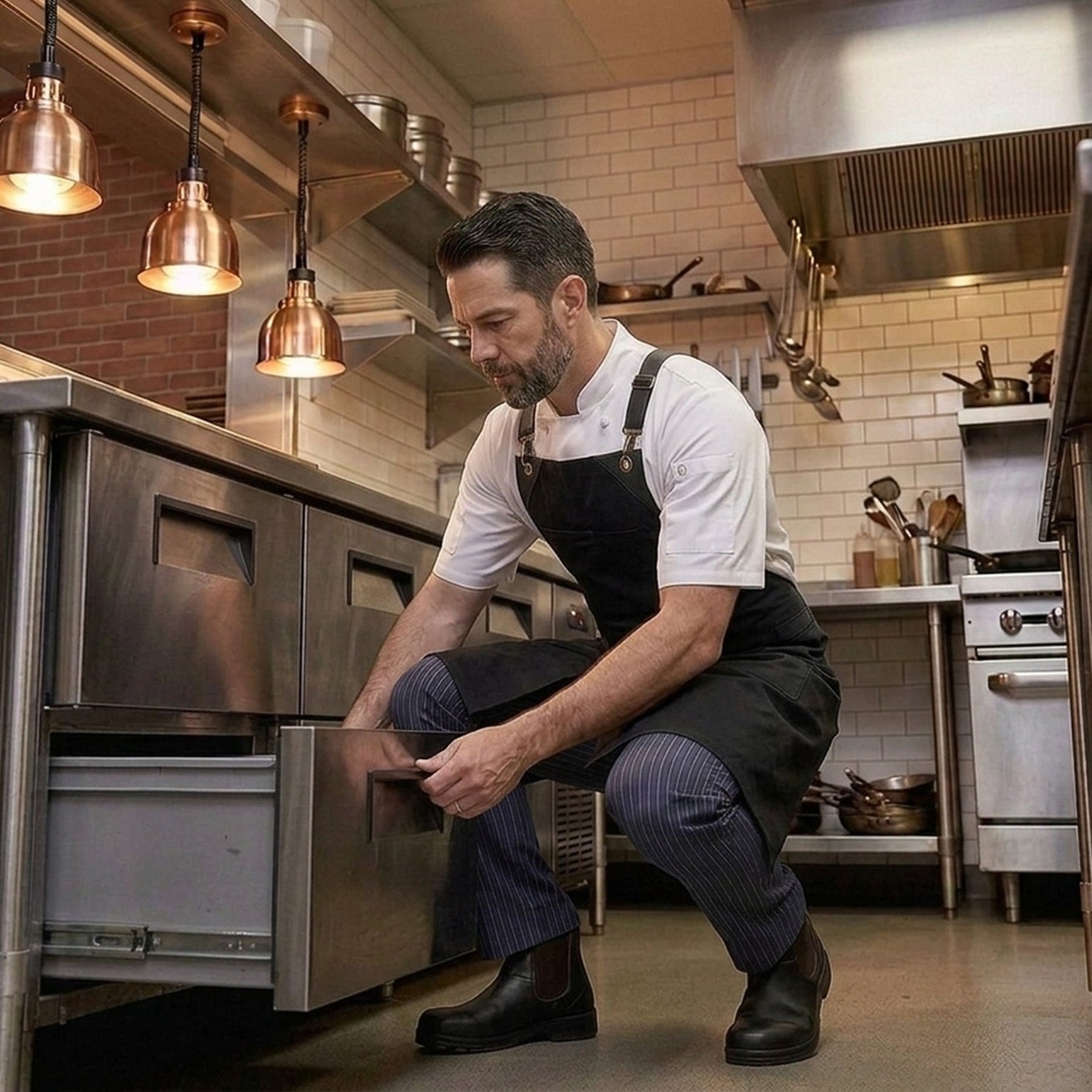
Before: Your servers and line cooks are trapped in visually appealing but rigid aprons. When they bend down to a low-boy fridge, carry trays up a flight of stairs, or take a wide stance at the grill, the fabric tightens, rides up, and restricts their natural range of motion.
-
After: Your crew projects absolute premium authority to your guests, but their gear functions as an ergonomic instrument. They can squat, step, and pivot without friction, protecting their energy and extending their career longevity.
THE SPLIT-LEG ADVANTAGE IN HOSPITALITY
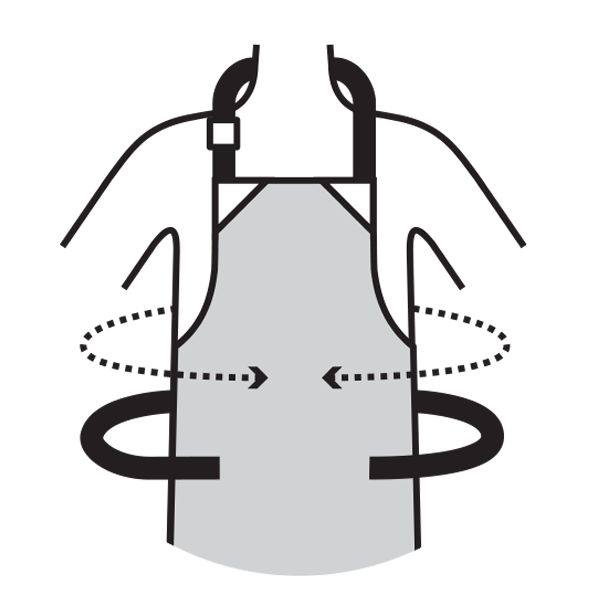
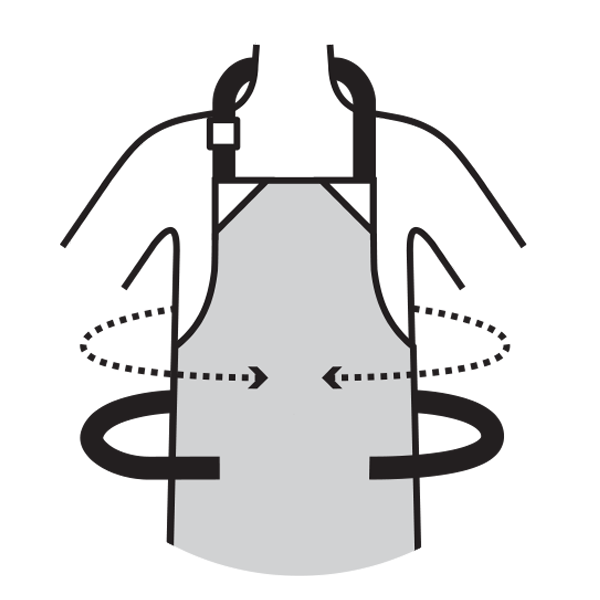
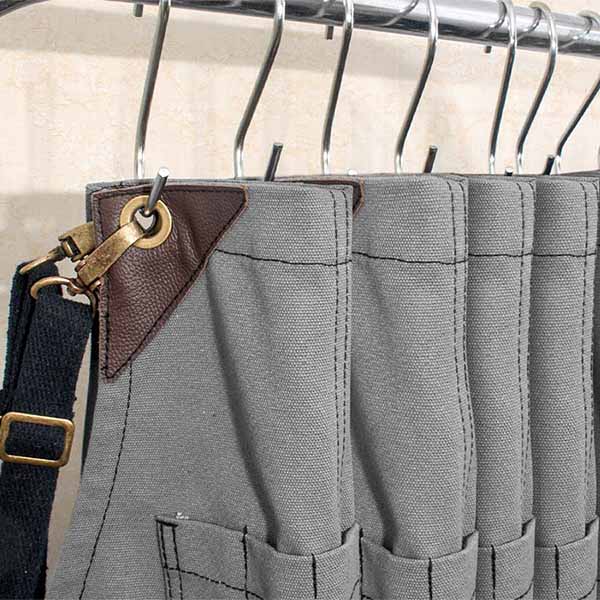
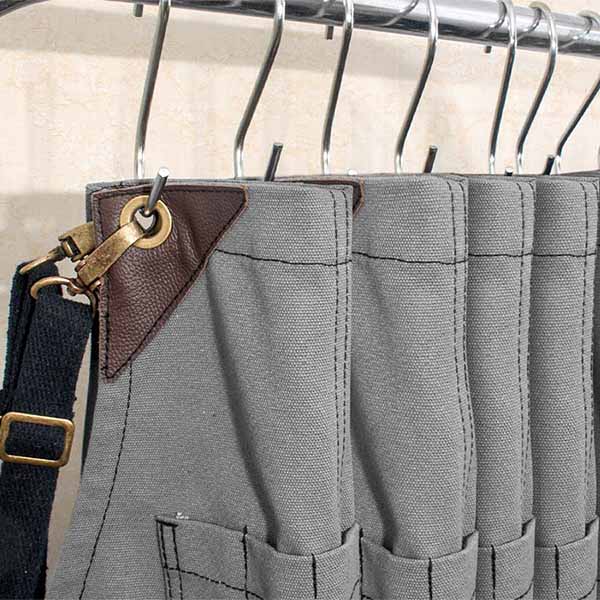
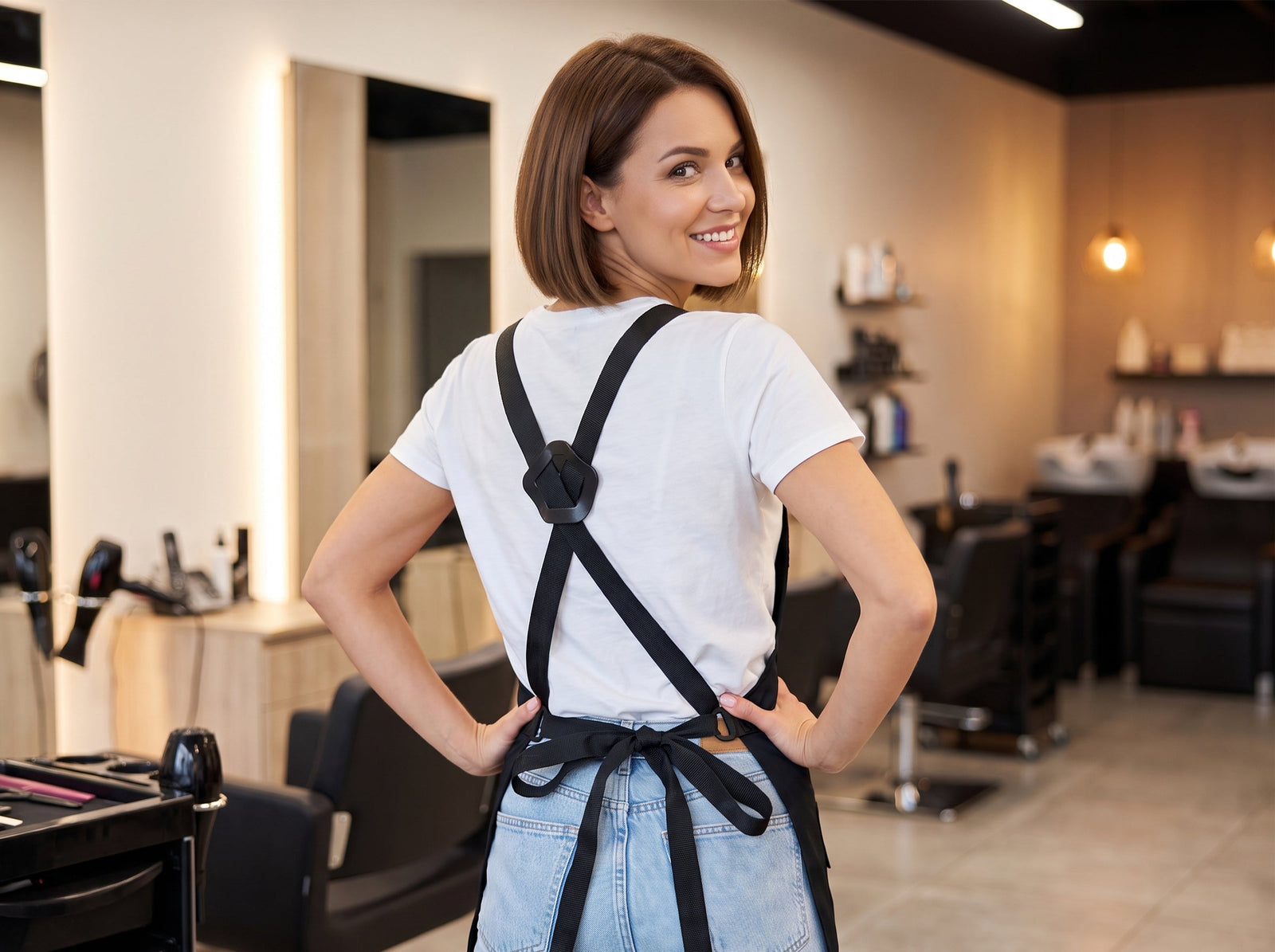
The secret to bridging the gap between a polished aesthetic and mechanical utility is structural design. While standard cross-back straps are now a baseline for reducing neck fatigue, split-leg architecture is the ultimate mobility upgrade for the hospitality sector.
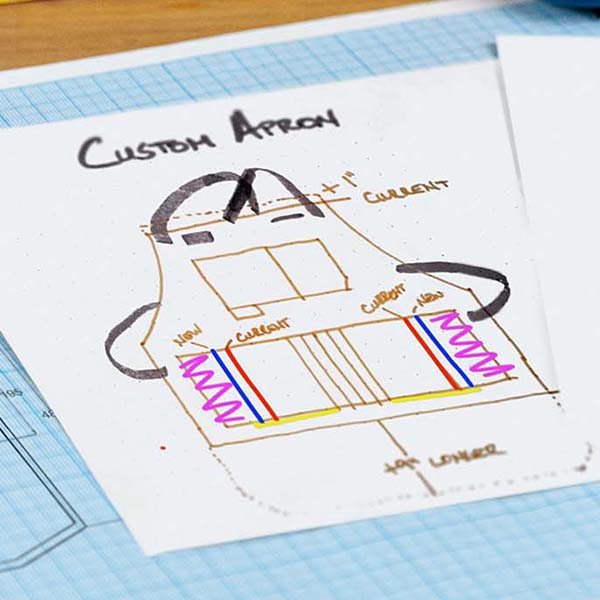
A split-leg design physically separates the lower half of the apron, allowing each leg to move independently. This provides comprehensive spill and heat coverage while completely eliminating the restrictive "tube" effect of a traditional apron. For multi-level restaurant venues or high-volume kitchens where speed and agility are non-negotiable, this structural upgrade prevents the physical exhaustion that leads to staff burnout.

RETENTION ROI AND CUSTOM CREW GEAR
Your uniform strategy is not just an HR requirement; it is a retention tool. When you guide shop owners, salon managers, and studio groups on visual branding and custom crew gear, you must consider uniform psychology.When staff feel physically supported by heavy-duty, ergonomic equipment, turnover drops.Under NY Sky provides the absolute best of both worlds: a tailored, sophisticated visual identity ready for B2B bulk custom embroidery, paired with the gritty, functional soul that standard corporate HR playbooks lack.
Stop forcing your crew to fight their uniforms. Upgrade your restaurant franchise uniform strategy with our premium split-leg aprons and give your staff the mobility they need to perform at the highest level.
FAQ Section
-
What is a split-leg apron and why is it used in restaurants? A split-leg apron features a physical split down the center of the lower half, allowing the wearer's legs to move independently. It is critical in restaurants because it allows a full range of motion for bending, squatting, and taking stairs without the apron riding up or restricting movement.
-
Can ergonomic workwear improve hospitality staff retention? Yes. Uniforms that restrict movement or cause physical pain (like neck strain from standard straps) contribute to daily fatigue and burnout. Ergonomic gear like cross-back straps and split-leg designs directly supports physical well-being, a key metric for staff retention.
-
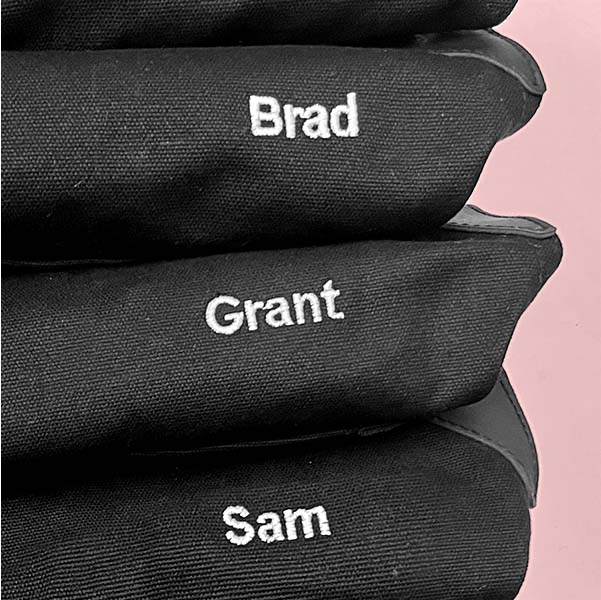
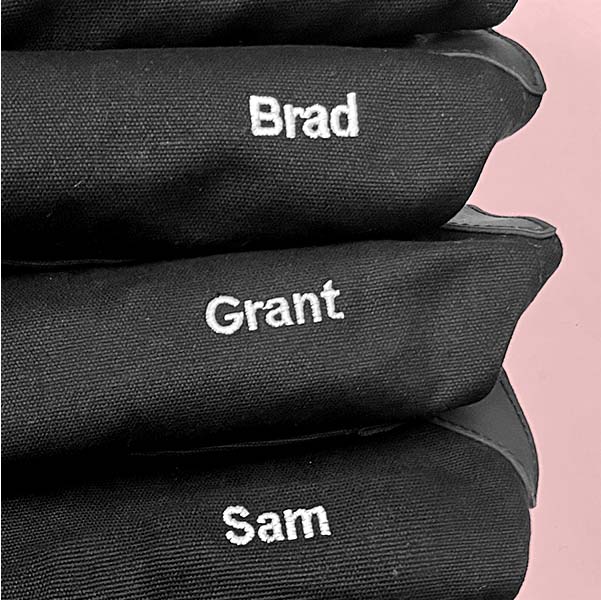
Does Under NY Sky offer custom embroidery for restaurant franchises? Yes. We specialize in B2B bulk orders and custom crew gear, providing premium visual branding without sacrificing the heavy-duty materials science and ergonomics that deskless professionals require.




Leave a comment (all fields required)