






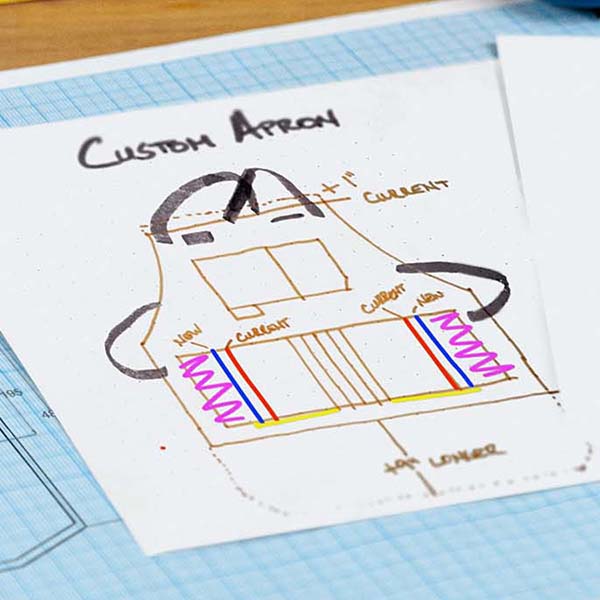


An apron can have a beautiful logo, a lovely founder story, and a pocket that's quietly trying to leave the company.
Before you pay for the first two, check the third.
Good apron quality starts with secure seams, properly finished hems, and reinforced pockets and strap attachments. Look for even stitching, protected fabric edges, and clean work at corners and joins. Broken stitches, missed sections, and pocket corners already pulling loose are bad construction. A higher price doesn't make them less bad.
Our view is straightforward: workwear should be well made in the places that don't get photographed, too. Turn it over. That's where the sales pitch has to show its work.

A founder story can't sew a pocket
“Founded by a chef” can tell you something useful about an apron. A chef knows what gets in the way during service, where a towel needs to hang, and how annoying a badly placed pocket becomes when you're busy.
Fair enough. We'd listen to that person about working in a kitchen.
But knowing what an apron needs to do and knowing how to manufacture it are different skills. Cooking experience doesn't automatically teach pattern cutting, fabric behavior, seam construction, or production control. Someone on the team needs that knowledge. The customer's credit card shouldn't have to fill the gap.
That's why we put weight on apparel experience. Our production manager oversees everything Under NY Sky produces. His background includes high-quality clothing brands and made-to-measure tailoring, where the details inside a garment are part of the job.
We bring that care to workwear. The upper-to-lower panel joins in our aprons use French seams or coverstitch, according to the model. Our hems use double-needle stitching and a minimum ½-inch hem allowance across all items. Pockets and straps get double stitching and bartack reinforcement.
Those are the details we want you to compare. A chef-founded brand with excellent construction deserves credit for it. Any brand charging for quality while hoping you won't look underneath deserves a harder question.
So let's look underneath.
French seams put the cut edges away
Cut a piece of woven fabric, and you've created an edge that needs finishing. Leave it poorly protected, and fraying can become your problem later. How the maker handles that edge is worth your attention.
A French seam encloses the raw edges inside the seam itself. You see a neat fold of fabric instead of the cut edges. Utah State University Extension explains this self-enclosed construction.

We like that finish because the edges are tucked away and the inside is clean. Caring about an apron's interior shouldn't require a special occasion or a silk blouse budget.
Where our aprons have a join between the upper and lower panels, we use French seams or coverstitch, depending on the model. These are different constructions. We don't call the coverstitched joins French seams, and a double row of stitches alone doesn't mean the raw edges are enclosed.
What about those familiar loops around an edge? That's usually overlock stitching, also called serging. It's a legitimate way to control fraying, as Coats' seam guide explains. Its presence alone doesn't condemn a garment.
But “it's overlocked” isn't a free pass for sloppy work. Loose tangles, missed edges, broken stitches, and fabric escaping the finish are problems. If a seam that's meant to lie smooth arrives puckered and pulling, don't let the word “premium” negotiate on its behalf.
We prefer an enclosed finish where the construction calls for it. And we expect every finish we use to be executed properly. That's a reasonable standard for something sold as professional gear.
The hem is where “nobody will notice” gets noticed
A hem finishes the fabric edge. It's easy to ignore while you're admiring the apron on a model who appears never to have spilled anything in their life.
Follow that hem around the actual product. Does the fold stay even? Does the stitching catch it securely? What happens at a corner or where another seam meets it?
This is where you can spot a missed section, a fold coming open, or a messy junction that got waved through production. We don't think customers should have to tidy up a new apron before getting to work.
At Under NY Sky, all our items have a minimum ½-inch hem allowance. Our apron hems use double-needle stitching. We choose those details because we believe a finished edge deserves enough material and proper sewing, including the less glamorous few inches around a corner.
The half-inch figure refers to the allowance used to form the hem. It isn't a measurement for every joining seam or necessarily the width of the finished fold.

And yes, the sewing still has to be good. Two untidy rows don't become craftsmanship through teamwork.
Pockets should stay attached to the business
Count the pockets if you like. Then check what keeps them on the apron.
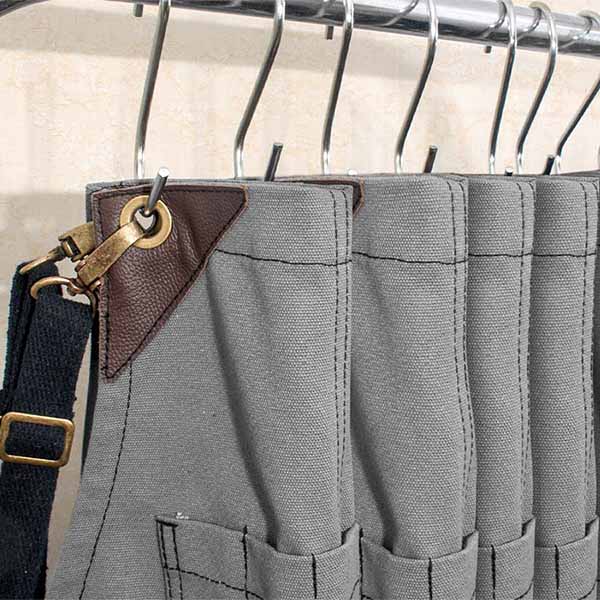
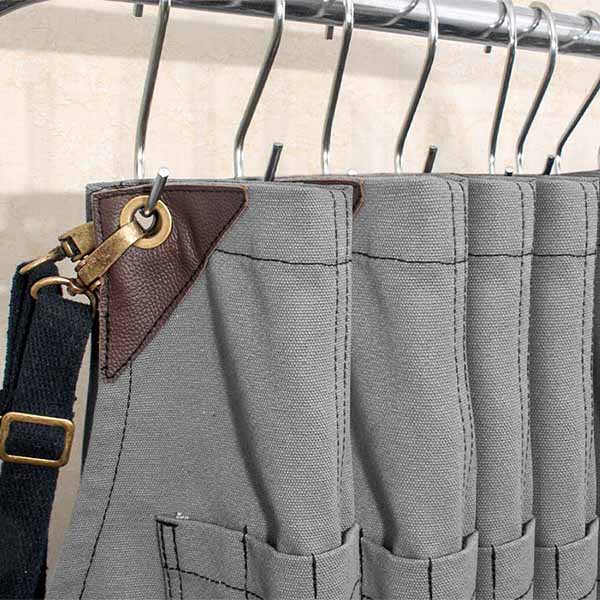
A pocket opening gets pulled whenever you reach inside. Strap attachments get tugged as you adjust the apron and move. These are working parts, so we believe reinforcement belongs in the construction from the start.
Our pockets and straps use double stitching and bartacks. A bartack is a short, dense section of reinforcing stitches. Look for those small stitched bars at attachment points. They aren't there to make the pocket look athletic.

This is one of the places where our bias is clear. We want reinforced attachments on gear intended for repeated professional use. A pocket that looks generous in a photo but is carelessly attached hasn't impressed us.
Double stitching doesn't translate into a claim of “twice as strong.” It means we've chosen two rows of stitching, with bartack reinforcement at the pockets and straps. That's a real construction detail we can show you, without inventing a percentage to put next to it.
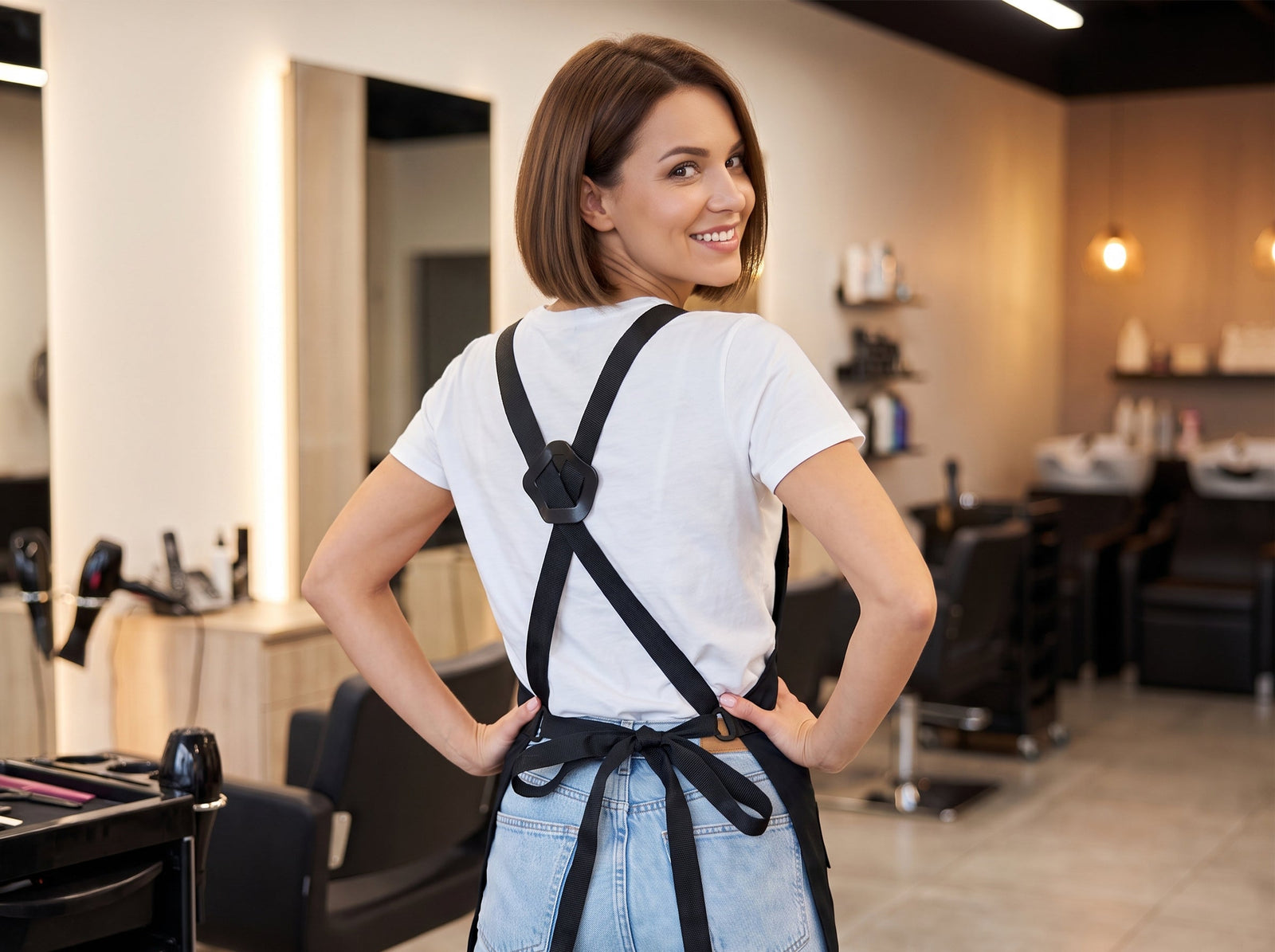
Attachment quality also deserves a place alongside comfort. Once you've checked the stitching, our cross-back versus neck-strap guide can help you assess how the apron sits and carries its load.
Turn it over before you hand over the money
Here's the inspection we'd use on our own aprons or anyone else's. You're looking for evidence of care and obvious faults. You don't need to audition for a job in our production team.
| Check this | What good work looks like | What we'd reject on a new apron |
|---|---|---|
| Inside panel joins | Secure stitching and neatly controlled fabric edges | Gaps, broken stitches, or fraying escaping the finish |
| Hems | An even fold caught securely by the stitching | Missed sections or a fold already opening |
| Corners and junctions | Layers handled neatly with continuous stitching | Skipped stitches, loose tangles, or a badly bunched junction |
| Pocket corners | Secure attachment with reinforcement where the pocket gets pulled | Lifting corners, broken stitches, or fabric already tearing |
| Strap attachments | Firm attachment and visible reinforcement | Loose stitching or damage around the attachment |
| Reverse of the stitching | Controlled stitches on the back as well as the front | A tidy face hiding a thread tangle underneath |
Shopping online? Ask for inside photos and close-ups of the pockets and straps. If the whole pitch is about craftsmanship, showing the craftsmanship should be an easy request.
Buying for a team? Inspect a sample and try the reach, fit, and pocket access before committing to the uniform order. Bring those questions to a custom or bulk-order inquiry.
Once the apron is yours, follow the care instructions for its material. Our washing tips explain the different requirements. Good construction deserves sensible care. The washing machine doesn't read brand promises either.
A few things worth clearing up
Does an expensive apron always have better seams?
No. Price is a reason to expect careful construction, not evidence that you're getting it. Inspect the inside, hems, and attachments before paying more.
Is overlock stitching bad?
No. It's a useful edge finish. Badly executed overlock is bad, just as a badly sewn French seam is bad. Judge whether the edges are controlled and the stitching is secure.
What construction does Under NY Sky use?
French seams or coverstitch at upper-to-lower apron panel joins, depending on the model; double-needle apron hems; at least a ½-inch hem allowance across all items; and double stitching with bartacks at pockets and straps.
Are French seams scratch-proof or snag-proof?
No. They enclose raw edges, which gives a clean interior finish. Comfort still involves the fabric, thread, and bulk of the seam. No sewn finish is immune to damage.
Can an inside photo prove an apron will last longer?
It can show you construction details and visible faults. It can't prove years of service or a strength advantage. For that, you'd need performance evidence. The photo is still a much better starting point than a flattering adjective.
We believe the inside of an apron should help justify buying it. That's why we put care into the hems, joins, and attachments, and why we're happy to tell you what goes into them. Explore our heavy-duty aprons with that checklist in mind.



Leave a comment (all fields required)