









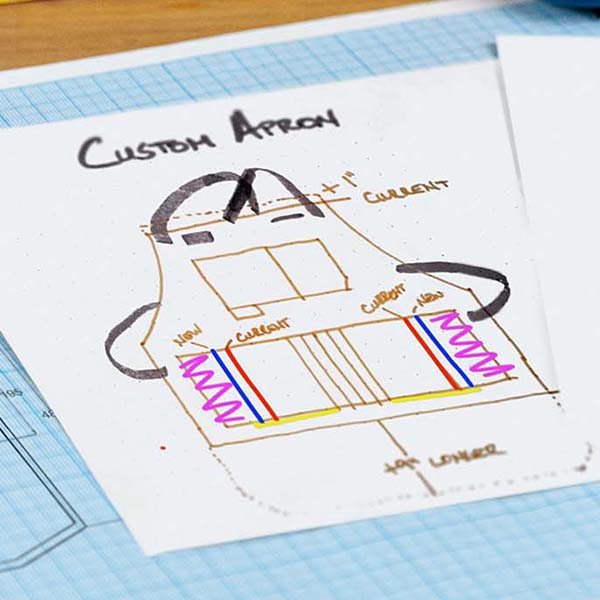
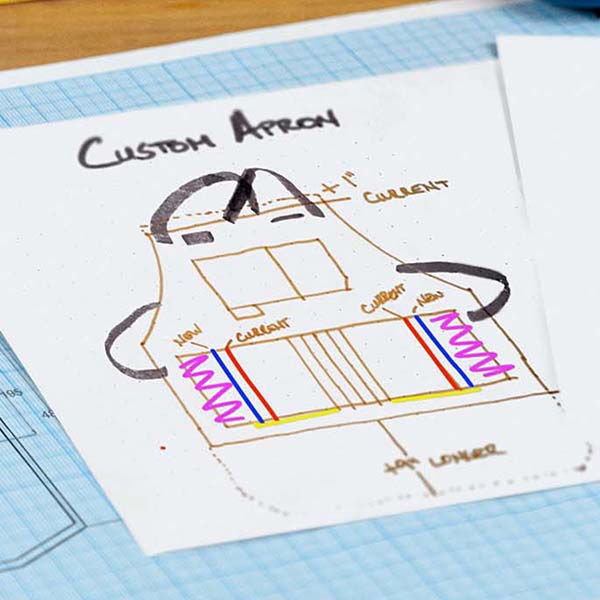


An apron pocket shouldn't turn a quick reach for a tool into a small excavation.
Choose apron pockets by what you carry, how you reach them, and whether the layout works when you bend or sit. Check opening width, depth, placement, closures, and reinforcement. More pockets help only when they organize useful items without getting in your way.
A phone that slips out when you lean forward, an opening you can barely fit your hand into, or a pocket trapped against your lap can make the wrong layout annoying all day. Those are the details worth checking before you buy.

Start with the layout, then check what fits inside.
Start with what you carry, not the pocket count
Lay out the items you actually use during a shift. Then decide what belongs on you and what can stay at the workstation.
A server might need a pen and order pad. A barber might reach repeatedly for combs and clips. A maker might want separate spaces for a pencil, small fasteners, and a measuring tool. Those jobs don't call for the same storage.
At Under NY Sky, conversations with customers over our 12 years in the market have helped shape our apron designs around the needs of different industries. For example, we developed our barista apron with input from a group of baristas about what they needed while working. The useful starting point was their routine, not a target number of pockets.
Large pockets have their place. The Work Apron with roomy front pockets is one example for hospitality and service work. But a large shared compartment and several narrow tool spaces solve different problems.
If everything ends up in one pocket, you may still have to hunt for the smallest item. If every compartment is narrow, the larger thing you need might not fit anywhere.
Check placement, shape, and closure separately
“Chest pocket” tells you where a pocket sits. “Zippered pocket” tells you how it closes. A pocket can be both, so comparing those labels as if they were competing designs won't tell you much.
Look at where the storage sits, what fits inside, and how you get into it.


Placement, shape, and closure each affect how you use a pocket.
| Feature | Useful when | Check before choosing |
|---|---|---|
| Large open pocket | You need quick access to larger items | Whether small items disappear beneath larger ones |
| Divided pockets or narrow slots | You want separate places for small tools | Whether your actual tools fit and can be retrieved easily |
| Chest placement | You prefer some items higher on the apron | Whether contents stay secure when you lean forward |
| Lower or side placement | You want storage away from the chest | Whether the opening remains accessible when seated |
| Zippered closure | You want a closed compartment | Whether you can operate it conveniently during the job |
| Protective flap | You want a cover over the opening | Whether it gets in the way of frequent retrieval |
| Utility loop | An item is better hung than pocketed | Whether it stays secure and clear of your movements |
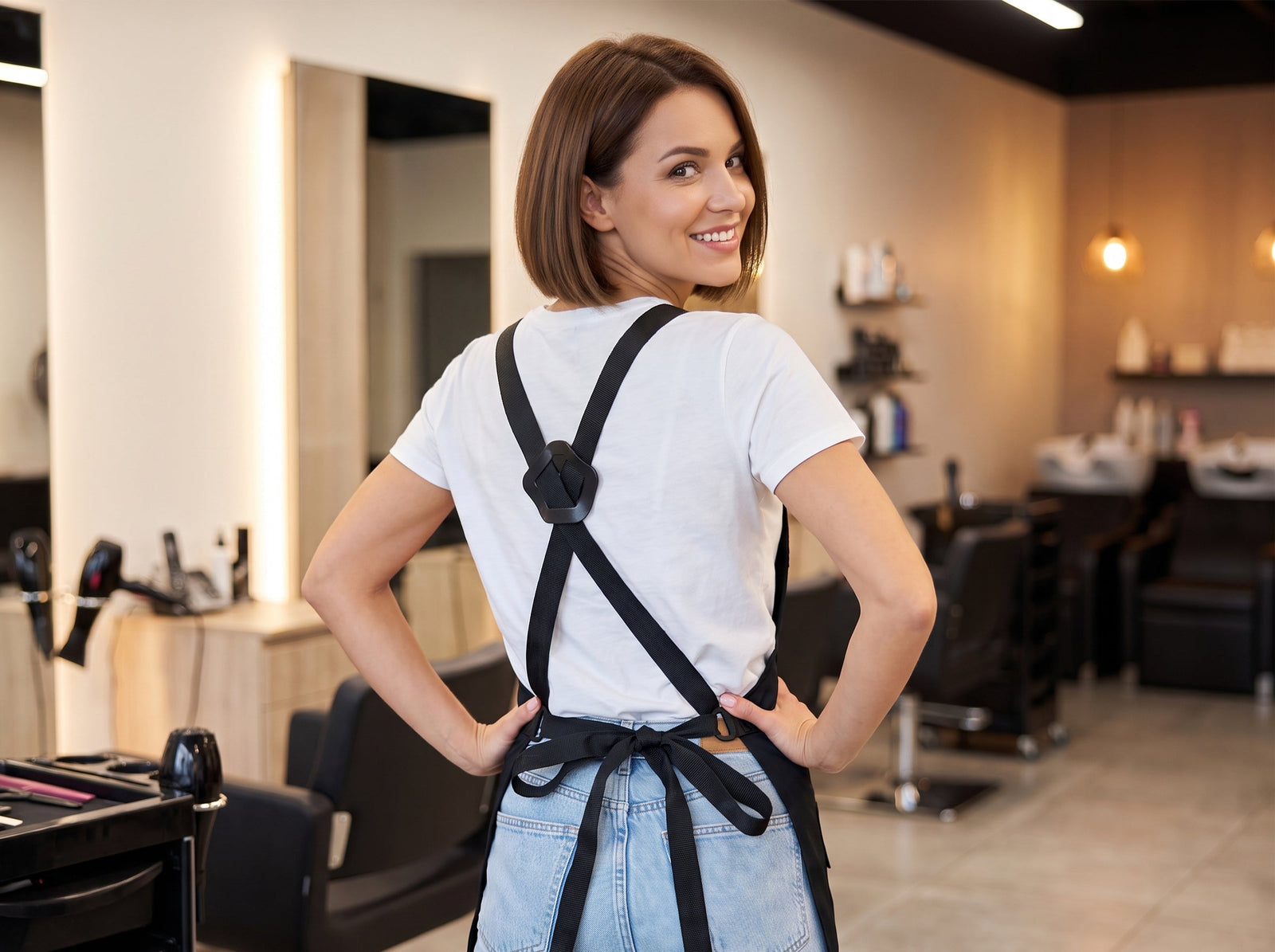
In salons, the choice also involves hair clippings. Our barber apron with zippered or flapped pocket options was designed to help keep clippings out of the compartments. That gives customers a choice between two ways of covering the opening.
A closure is not a waterproof guarantee. Fabric, seams, and the closure itself all matter. And a pocket you open constantly may need a different arrangement from one holding belongings you rarely touch during the shift.
A pocket has to work when you move
Product photos usually show someone standing upright. Your working day probably involves more than that.
The Canadian Centre for Occupational Health and Safety recommends placing tools within easy reach, without requiring workers to twist or bend to reach them. That's workplace guidance, not an apron rating, but it gives us a sensible question: can you retrieve what you need without working around the storage?
Pottery makes that question particularly clear. Sit at a wheel and your apron changes shape across your lap. A pocket opening can become awkward to reach, while loaded contents may press against you.
We designed one of our pottery styles with pocket placement intended to let people reach their tools while seated. We also offer a simpler style with a chest pocket for people who prefer not to fill lower pockets at the wheel. You can compare both approaches in our pottery apron collection.
That second option matters. Some potters want tools on their apron. Others prefer a nearby tray. Both are reasonable choices.
Tools on your apron or beside the wheel? Choose the layout that suits how you work.
CCOHS also advises keeping seated tasks and materials within easy reach. Applying that principle to pocket selection means checking access in the position you actually work in.
Try the Load, Reach, Bend, Sit check
Use familiar, non-sharp items to check an apron you own or can try on.
- Load: Add what you would realistically carry. Include your phone case if your phone belongs in the pocket.
- Reach: Retrieve each frequently used item. Check whether your hand fits comfortably alongside the contents.
- Bend: Lean and move as you normally would, over a soft surface when checking a phone. Watch for items shifting toward the opening or contents getting in the way.
- Sit: Use your usual working posture. Check whether the opening remains reachable and whether anything presses into your lap.
This is a practical fit check, not a guarantee that an item cannot fall out. If you're buying online, use your own item measurements and look for photographs showing the pocket opening and the apron in use. Ask for dimensions when they aren't supplied.

Check the pockets in the positions you actually work in.
Look at how the pockets are built and how you'll use them
Pocket depth and opening width need to work together. A deep compartment isn't helpful if retrieving something from it is a struggle. A wide opening isn't enough if the item barely sits below it.
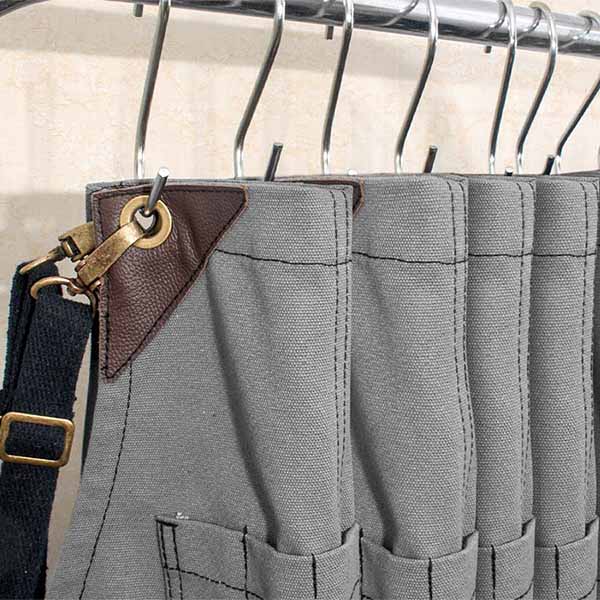
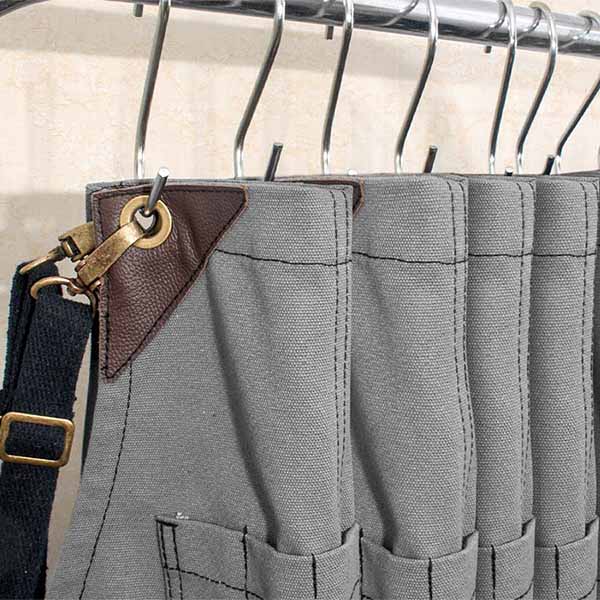
Construction deserves a closer look, too. Check the points where the pocket attaches to the apron, especially its upper corners. Look for stated reinforcement such as bartacks, extra stitching, or reinforced trim. These details alone don't establish a weight limit, so don't assume a pocket can carry anything simply because it looks sturdy.
Our gardening, workshop, and salon designs use different arrangements because a harvest pouch, a tool compartment, and storage for combs have different jobs. The right construction still needs the right layout.

Look closely at where the pocket attaches, especially the upper corners.
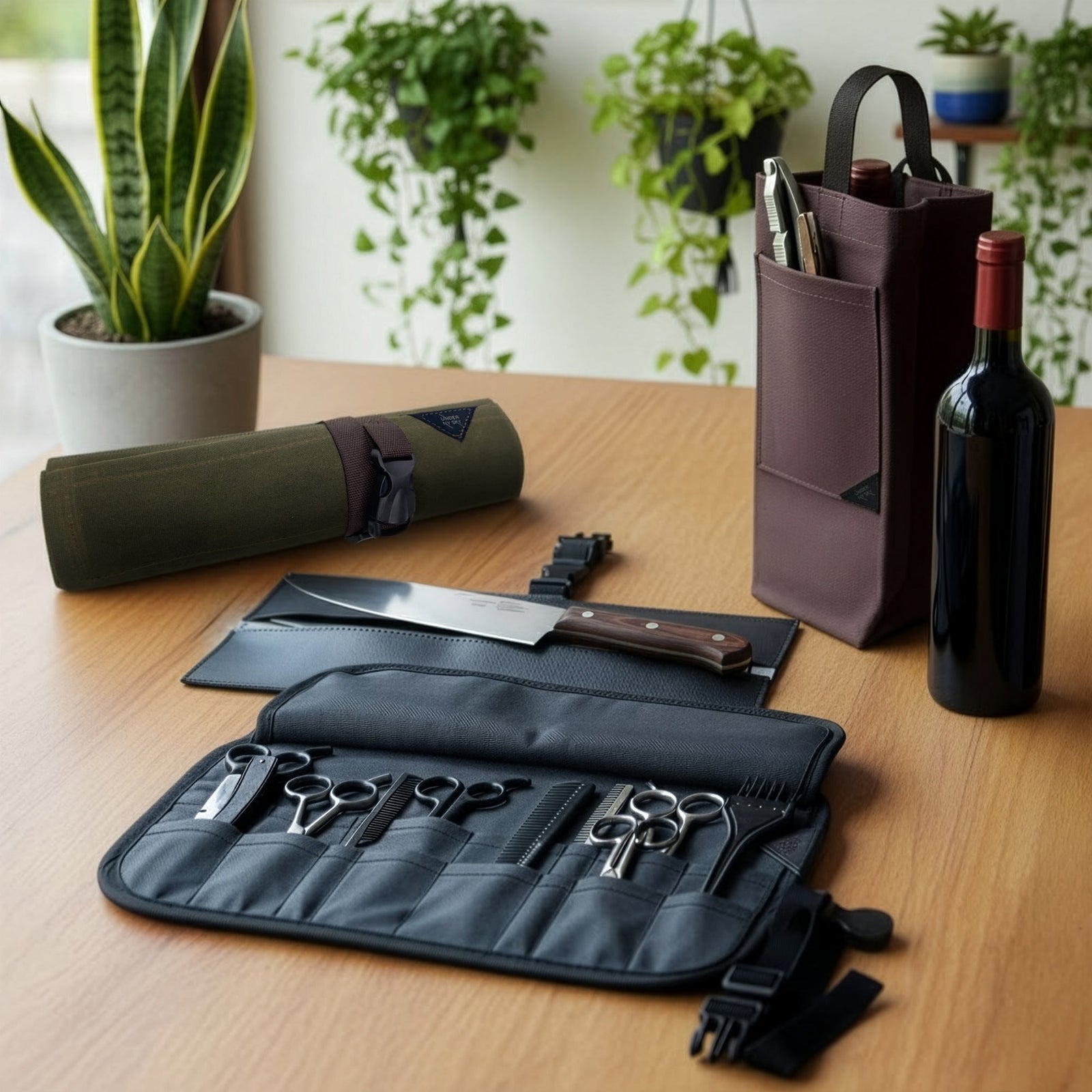
One of our favorite examples goes beyond storage during a shift. The Utility Apron that folds into a knife roll uses its compartments as part of a convertible design when the apron is taken off and rolled.
We like designs that solve a specific problem, including what happens to the gear after work. Follow the product's storage instructions and use protective blade sheaths for sharp edges. Ordinary apron pockets aren't a place to drop an exposed knife.

The Utility Apron folds into a knife roll when the apron comes off.
Before choosing, picture the full routine: loading up, reaching repeatedly, moving through the job, emptying the pockets, and cleaning the apron. A layout earns its place by making those steps easier.
Frequently asked questions
How many pockets should a work apron have?
There isn't one useful number for every job. Choose enough storage to keep your frequently used items accessible, without filling compartments you don't need or carrying unnecessary weight.
How can I tell whether an apron pocket fits my phone?
Compare the pocket dimensions with your phone in its case. Check the opening as well as the depth. A phone fitting inside doesn't establish that it will stay secure when you bend; the pocket fit, placement, and closure also matter.
Are zippered pockets better than open pockets?
Zippers give you a closed compartment, while open pockets offer more immediate access. Choose based on the contents and how often you retrieve them. Neither design suits every task, and a zipper alone does not make a pocket waterproof.
What if I don't like loaded pockets while working seated?
Choose an apron with simpler storage and keep suitable tools at a nearby workstation. For pottery, a chest-pocket style may suit you better than loaded lower pockets, depending on your posture and working habits.
How should I clean apron pockets?
Empty every compartment first, check for trapped debris, and follow the care instructions for the specific apron. Fabric, coatings, and trim can require different methods. Don't assume a washable cotton apron and a waxed canvas apron have the same instructions.
Before you buy, make a short list of what you carry. Then compare Under NY Sky's tool-pocket apron layouts and choose the storage that fits your work.
Last updated: October 7, 2026.




Leave a comment (all fields required)