








How to Keep Apron Straps from Slipping Off Your Shoulders
You reach for a bowl. Your apron strap slides down. You put it back. Two minutes later, you reach for something else.
Apparently, adjusting your apron is now part of the job.
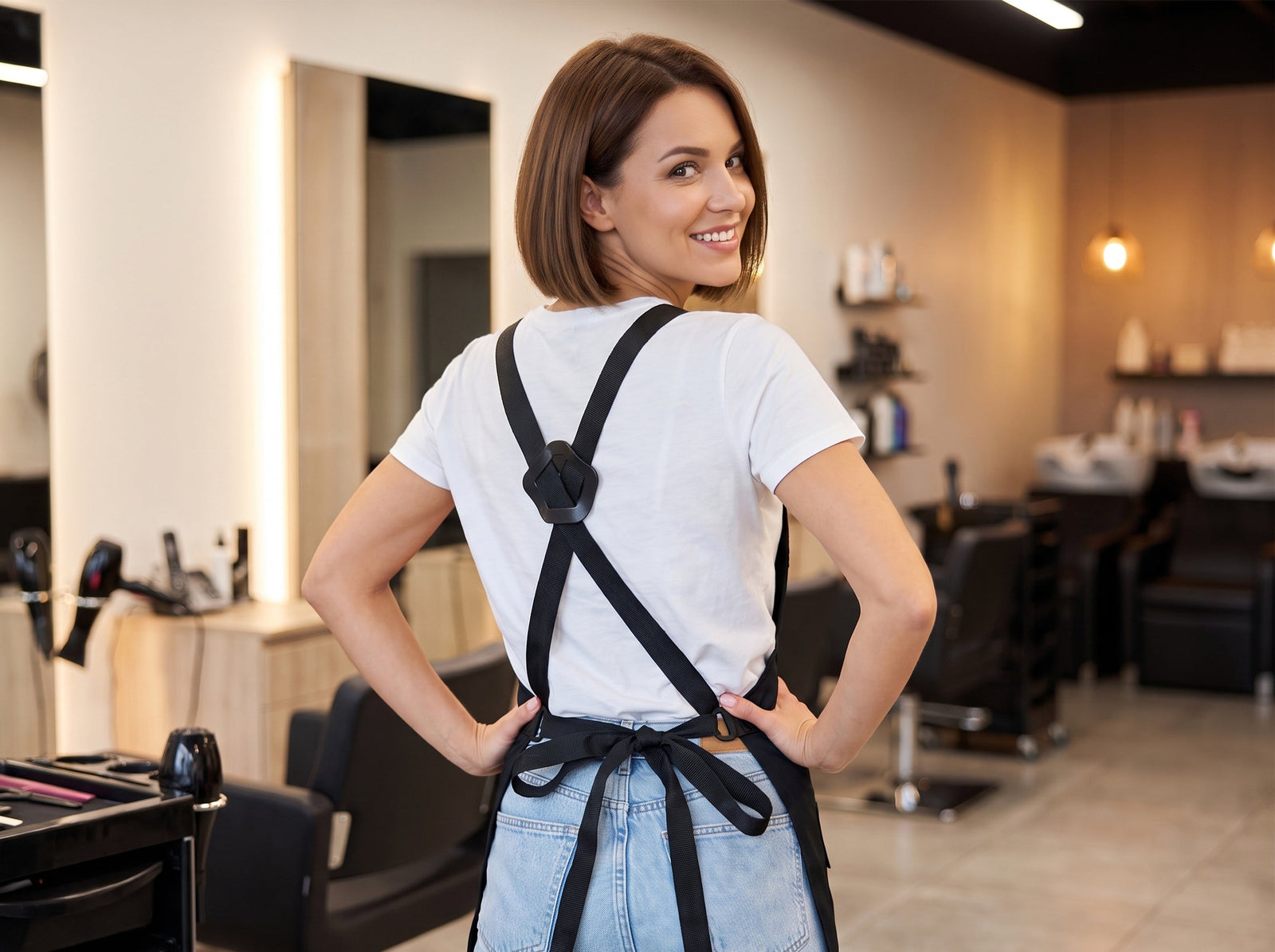
If that sounds familiar, look at the back of your apron before giving up on it. Check the strap adjustment, make sure the straps follow their intended path, and look for a keeper that holds them together where they cross. On a design with an adjustable keeper, moving that piece can help you find a more secure, comfortable position.
The detail is easy to overlook when you're shopping. It becomes much more interesting after the twentieth shoulder shrug of the afternoon.

Can cross-back apron straps still slip?
Yes. “Cross-back” tells you that the straps cross behind the wearer. It doesn't tell you whether anything holds that crossing together.
The frustration shows up in real conversations. In aReddit discussion about cross-back aprons, one participant who uses one for pottery writes that “the straps always fall off my shoulders.”
That's one person's experience, not a verdict on every cross-back apron. But it's a useful reminder that a strap system has to work while someone is moving, not just while they're standing still for a product photo.
We like cross-back aprons. We also think the words on the label are only the beginning. Look at how the straps attach, how they adjust, and what keeps them together behind you.
If you're still deciding between shoulder straps and a neck loop, ourcross-back vs. neck-strap guide covers that broader choice. Here, we're dealing with the shoulder strap that keeps trying to leave work early.
Before buying another apron, check the one you have
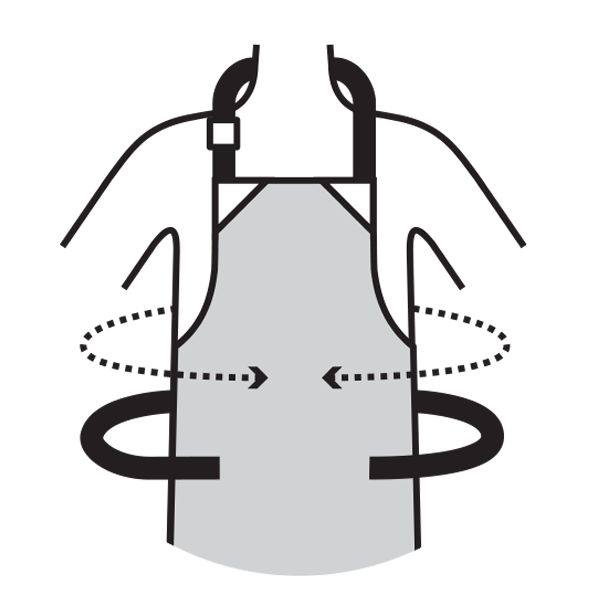
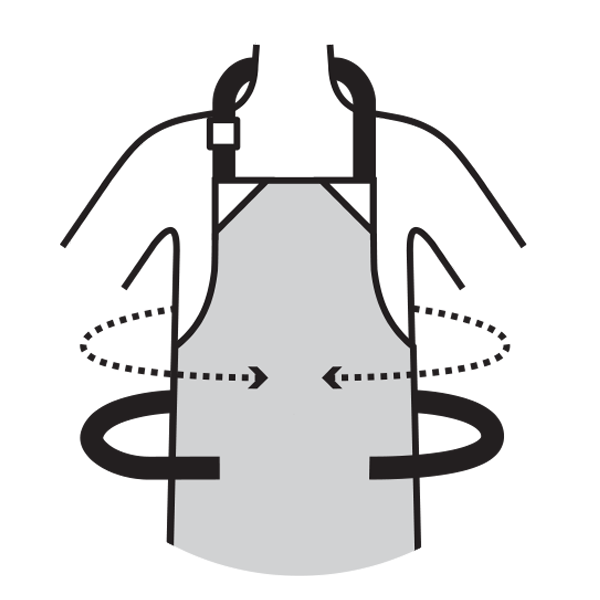
Start with the apron empty so you can see how it sits without tools pulling on it. Lay the straps flat and check that they're routed as intended. A twisted strap or an incorrectly threaded back is worth sorting out before you decide the apron doesn't fit.
Next, adjust the straps so the bib sits comfortably and the shoulder straps aren't hanging loose. Secure the waist according to the apron’s design. Pulling everything as tight as possible isn't the goal. You still need to reach, bend, and work comfortably.
If the straps have a keeper, check its position. An adjustable keeper gives you another way to change how the straps sit without simply shortening them further.
Then put your usual essentials in the pockets and repeat a few normal movements. Reach forward. Bend as you would at your workstation. Sit down if that's part of your day. Notice whether one side pulls more than the other.
You don't need a fitting ceremony. You need to know whether the apron stays comfortable when you actually use it.
The little keeper at the back has a job
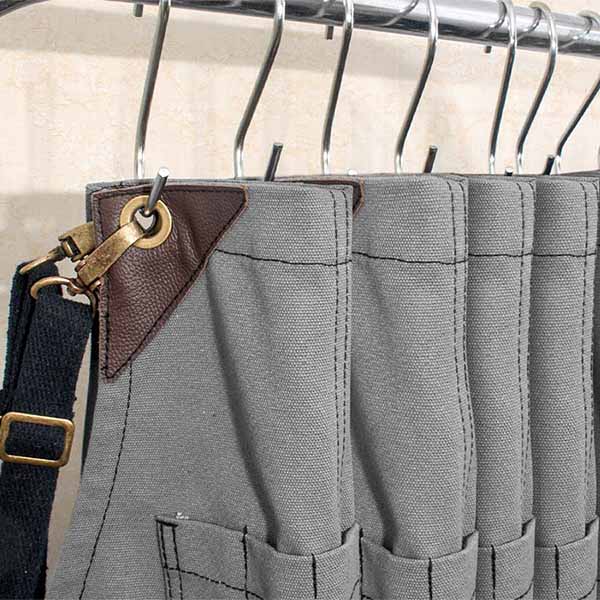
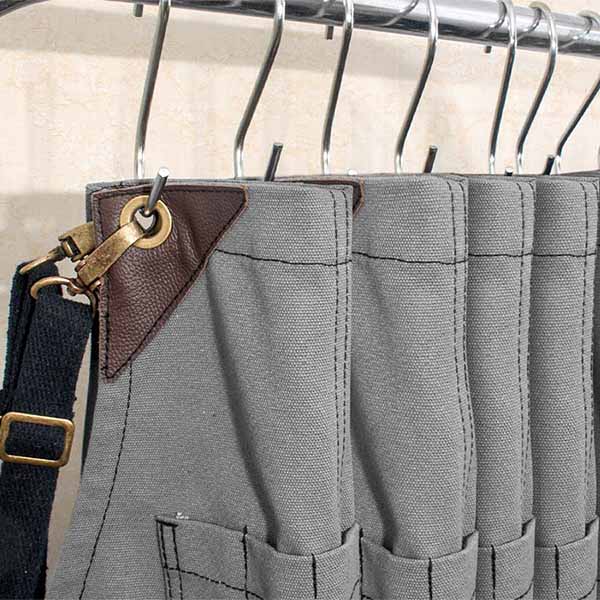
On our aprons, a strap keeper holds the two shoulder straps together where they cross. Some models use a metal keeper, including the small triangular piece shown here. Others use a leather keeper that serves the same purpose.
The keeper can slide higher or lower. Set it where the straps feel comfortable and secure, then check the fit as you move. There's no single height we prescribe for everyone.
AllUnder NY Sky cross-back aprons include a keeper. So do the cross-back strap sets we sell separately.
We include it because we want the straps to stay together at the back and help keep them from slipping off the shoulders. In our customer-service experience, we haven't received complaints about shoulder straps slipping on our cross-back aprons. That's our experience with customers, rather than a promise about every possible body, adjustment, and working situation.
It's a small part. It deserves more attention than it gets

Metal or leather, the keeper holds the straps together and slides to adjust its position.
One size still needs adjustment
Our aprons are one-size designs. The adjustable straps and movable keeper let the wearer change how the strap system sits, but they don't change the width or length of the fabric panel.
That distinction matters. A keeper addresses how the straps stay together. It doesn't turn an apron into a different size or add coverage around the sides.
Before buying, check the individual apron’s measurements as well as the back view. If you have narrow or sloping shoulders, the keeper is a feature worth inspecting, but the complete fit still matters. The useful question is whether the apron gives you the coverage and freedom of movement you want after adjustment.
Can you replace the straps instead?
Sometimes the apron itself is doing its job and the straps are the part you'd like to change.
We sellseparate cross-back strap sets in cotton and leather, and both include a keeper. These sets attach with clasps and require eyelets at both shoulder attachment points on the apron.
Check those connections before ordering. An apron with sewn-in straps and no shoulder eyelets isn't a direct match for these sets. Having an apron you like doesn't automatically mean replacement straps will attach to it.
If you're unsure, compare your apron’s attachment points with the set’s product photos or ask us before buying. Ourhow-to-use page also shows the different strap arrangements.

Replacement sets require eyelets at both shoulder attachment points.
Buying an apron as a gift? Look at the back
The front gets the color, the pockets, and the embroidery. It usually gets your attention first.
Before you buy an apron for someone who will spend hours wearing it, take a look behind it too. Can they adjust the straps? Is there a keeper? Does the apron offer the coverage they need? Will it suit the way they work?
Those questions are useful whether you're buying for a chef, barber, potter, gardener, or the person who volunteers to cook every holiday meal.
An apron can look great and still leave its wearer constantly putting a strap back on their shoulder. We'd rather get that little detail right.
Explore ourcross-back aprons with strap keepers, or check the attachment points on your current apron against ourreplacement strap sets.





Leave a comment (all fields required)