





Cotton vs. Coated Twill: Choosing the Right Protection for Your Studio
In a high-traffic beauty or tattoo studio, your body is under constant siege. Colorists move through a barrage of ammonia and peroxide; tattoo artists navigate the high-stakes world of cross-contamination; and cosmetologists fight a losing battle against microscopic hair splinters.
If your gear is made of the wrong material, you aren't wearing protection—you’re wearing a liability. Here is the technical breakdown of why Coated Twill can help those who can't afford to get soaked.
The Porosity Problem: Why Organic Fibers Fail
Cotton and linen are the legacy standards of the "maker" look. They feel natural and look "authentic." However, under a microscope, these fabrics are a labyrinth of open space.
Natural fibers are inherently hydrophilic (water-loving). When a colorist spills developer or a tattooer catches an ink splatter, those organic threads pull the liquid deep into the core of the garment. This leads to the "Absorption Penalty": the fabric holds chemicals and pigments against your skin for the duration of your shift. This prolonged contact is a primary cause of occupational contact dermatitis, a frequent risk for beauty and service professionals.
The Synthetic Compromise: Rubber, Vinyl, and Nylon
When professionals realize cotton isn't cutting it, they often pivot to 100% synthetics. But these come with their own set of operational hurdles:
-
Vinyl (PVC): A 100% waterproof solution, but it’s essentially a rigid plastic sheet. It lacks breathability and, according to clinical research on skin exposure, the heat retention can lead to significant skin irritation over long shifts.
-
Rubber/Latex: Excellent for chemicals, but a nightmare for temperature regulation. Furthermore, the CDC warns of latex allergies that can be triggered in both the artist and the client through repeated exposure.
-
Nylon: Lightweight and durable with high tenacity, but it often feels flimsy and doesn't provide the structured "shield" feel required for precision work.
The Gold Standard: PU Coated Twill
This is where material science solves the studio dilemma. Coated Twill is a hybrid textile that layers a liquid Polyurethane (PU) coating over a traditional, heavy-duty cotton base.
The result is a fabric that functions like an industrial shield but wears like a professional garment.
-
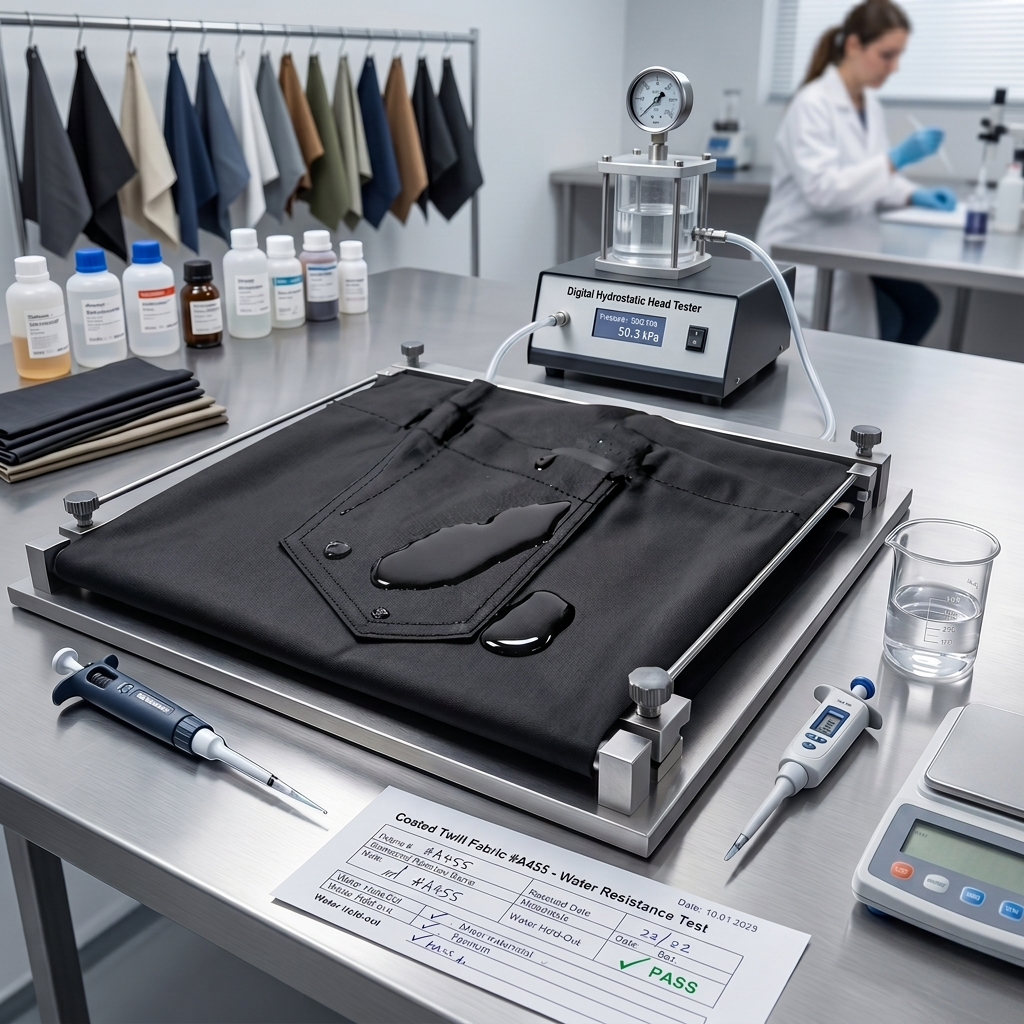
The Barrier Effect: The PU coating involves each individual yarn, sealing the weave. This creates a non-porous surface that prevents liquids from "wicking" through the fabric.
-
Pigment & Chemical Resistance: For colorists and tattooers, this is non-negotiable. Whether it’s 40-volume developer or carbon-based ink, the spill sits on the surface, allowing for an immediate wipe-down rather than a permanent stain.
-
The Comfort Logic: Unlike vinyl, Coated Twill maintains a "cotton-touch" on the underside. This means the side against your body stays breathable and hypoallergenic, while the outer side remains an impenetrable wall against hair splinters and moisture.
FAQ: Studio Material Science
-
Can a coated apron really protect against hair splinters? Yes. Without the "fuzzy" surface of raw cotton, hair clippings have nothing to grip onto. They simply slide off the non-porous surface, preventing them from becoming embedded in the fabric.
-
Is Coated Twill safe for long shifts? Absolutely. By keeping the cotton side against the skin, you avoid the "greenhouse effect" of 100% synthetic aprons while maintaining a barrier against moisture.
-
How does it handle chemical spills? PU coatings are designed to be resilient against the common acids and bases found in salons. It is the same technology used in high-performance medical upholstery to ensure liquid repellency and longevity.




Leave a comment (all fields required)