







What Is a Split-Leg Apron? Why It Moves Better at Work
A long apron should protect your legs, not tie them together.
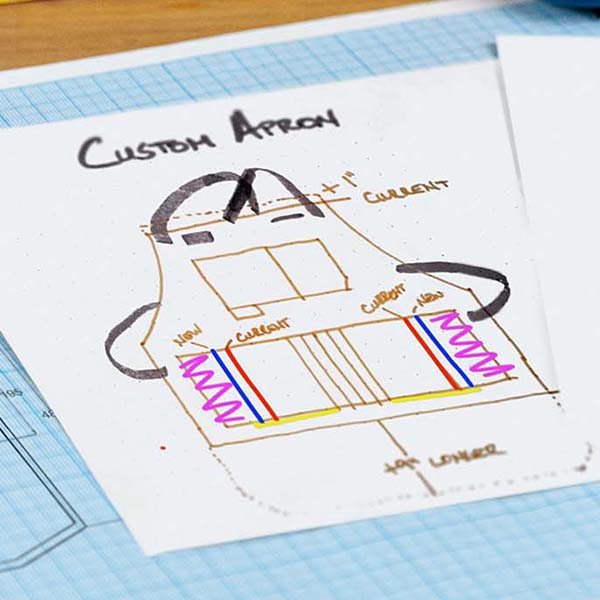
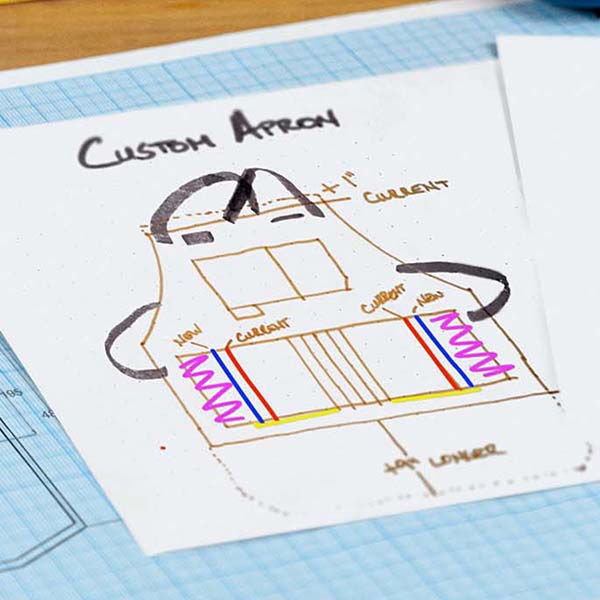
A split-leg apron divides the lower front into two panels so each side can move with one leg. In an overlapping design, those panels preserve front coverage while making it easier to step, crouch, sit, kneel, and work astride a pottery wheel.
You may also see the same basic construction described as a divided-leg apron, split-front apron, split-panel apron, or simply an apron with separate leg panels.
That sounds like a small pattern change. During a busy shift or a long studio session, however, it can be the difference between wearing your workwear and wrestling with it.
An apron cannot correct an unsafe workstation or solve workplace ergonomics by itself. But workwear should not add resistance to movements the job already requires.
OSHA identifies bending, reaching, and working in awkward body postures as common workplace ergonomic risk factors. NIOSH also notes that awkward or unnatural postures require greater exertion and can limit range of motion.
A well-cut mobility apron follows the worker instead of pulling against them.

What Exactly Is a Split-Leg Apron?
A conventional bib apron usually has one continuous lower panel. It works well when the wearer remains upright and moves within a relatively narrow stance.
But when that stance widens, the fabric may pull across the thighs. When the wearer sits, a long single panel can gather in the lap or slide away from the legs it is supposed to protect.
A split apron changes the geometry below the waist.
The lower section separates into a left and a right panel. Each panel can move with its corresponding leg instead of forcing both legs to work behind one rectangle of fabric.
The most functional versions do more than cut an opening down the center. An overlapping split-front apron allows the panels to cross while the wearer is standing and separate as the legs move apart.
That overlap matters when coverage is the reason for wearing a long apron in the first place.
In plain English: A split-leg apron is a long apron whose lower section is divided so the legs can move independently. Overlapping panels add coverage, while a simple front slit primarily adds stride room.

One Apron Design, Several Names
Workwear vocabulary is not always consistent. Retailers, makers, and customers use several expressions for related constructions, but those expressions do not necessarily describe identical aprons.
|
Term |
What it usually means |
Accuracy note |
|
Split-leg apron |
The lower apron separates around the legs. |
Best umbrella term. |
|
Divided-leg apron |
Two lower sections allow independent movement. |
Close synonym. |
|
Split-front apron |
The front opens or separates below the waist. |
May be overlapping or only slit. |
|
Split-panel apron |
The lower front is built from separate panels. |
Useful descriptive variant. |
|
Apron with separate leg panels |
Literal description of the construction. |
Clear for unfamiliar shoppers. |
|
Front-slit apron |
One panel has an opening cut into it. |
Not necessarily full divided coverage. |
If coverage matters, look beyond the product title. Check whether the lower sections overlap, how high the division begins, and whether each panel actually rests over a leg when you sit.
Why a Conventional Apron Can Fight the Job
Think about the movements that happen before a lunch service is even halfway over.
A cook steps sideways between stations. A bartender crouches to reach a bottle. A server turns quickly toward a table. A potter sits down with a wheel positioned between the knees.
None of those bodies is moving like a mannequin.
A long single panel can become a soft restraint. It may pull at the waist, ride upward, fold between the legs, or slide off the thighs. The wearer then has to hike it up, move it by hand, or accept that part of their clothing is no longer covered.
With divided leg panels, the fabric has somewhere to go. The left panel follows the left leg, while the right follows the right.
The design does not eliminate the physical demands of the job. It simply allows the apron to cooperate with a wider range of movements.
The right follows the right. The change is simple, but the after-state is obvious: fewer interruptions, less bunching, and coverage that stays useful through a larger range of motion.
|
Movement |
Single lower panel |
Divided lower panels |
|
Long stride |
Fabric may pull across the thighs. |
Panels separate as the stride opens. |
|
Crouching |
Hem and waist can tug upward. |
Each side follows the bend more independently. |
|
Sitting astride a wheel |
Fabric can collect in the lap. |
Panels can rest over individual thighs. |
|
Kneeling or squatting |
One panel may twist or shift sideways. |
Separate panels can settle with the legs. |
Where the Divided Design Earns Its Keep
In the Kitchen: Faster Footwork, Less Fabric Management
Kitchen work is rarely performed squarely in front of one counter.
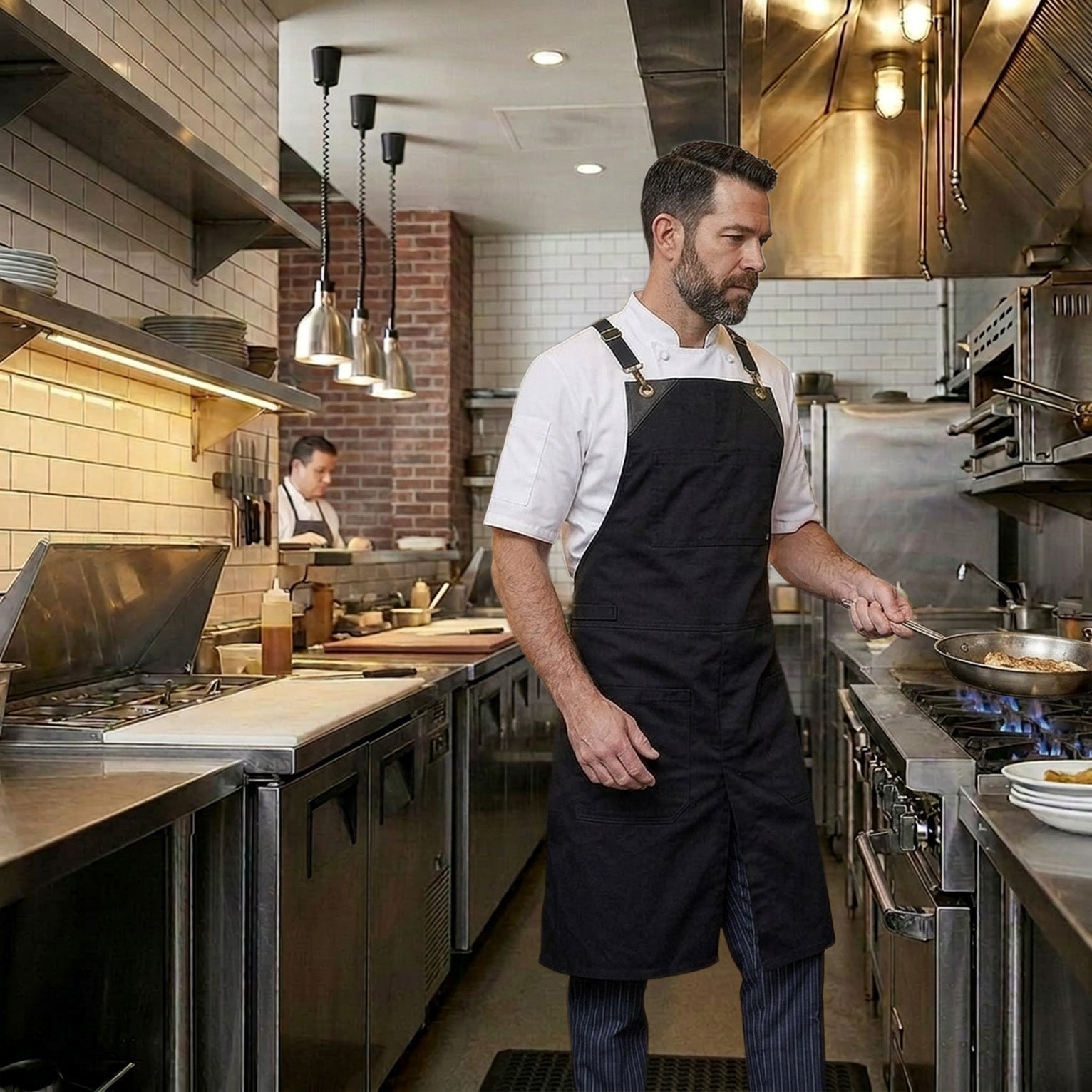
Chefs pivot, sidestep, reach into low refrigeration, and move continuously between prep, line, and pass. A long apron with a center split gives the legs more room to open without giving up the coverage professionals often want from the chest to below the knee.
The broader principle is well established in professional kitchen design: the working environment should support efficient, fluid movement. In one industry example reported by Foodservice Equipment Journal, restaurant operator Leon described refining its kitchens around ease and fluidity of movement to make physically demanding work easier for its teams.
Clothing is only one small part of that environment, but it should follow the same logic. It should cooperate with movement rather than become another item the cook has to adjust.

Behind the Bar: Reach Low Without Hiking the Apron Up
Bartenders repeatedly reach below the bar, step around coworkers, and move between wells, sinks, storage, and guests.
A split-front work apron can open with the wearer’s stance. That becomes especially useful on longer bib aprons, where a solid lower panel provides more fabric that can pull, twist, or bunch during a crouch.
The divided construction allows a bartender to retain the coverage of a longer apron while moving more naturally through low reaches and quick directional changes.
On the Floor: A Server Apron Built for Motion
For servers, the feature can also work in a shorter format.
A divided half apron gives the legs more room to move while keeping a server book, tablet, pens, towel, or wine key close at hand.
The important test is not how the apron looks while the wearer stands still. It is whether the apron stays comfortable and secure through the turn, the stair, the long stride, and the reach.
Explore split-leg apron options for restaurant and hospitality work.

At the Pottery Wheel: Separate Panels Protect Each Thigh
Pottery makes the functional advantage of divided panels especially easy to see.
A wheel thrower sits with the knees apart and the work centered between them. A standard apron often collects in the lap or leaves portions of the thighs uncovered.
A full divided-leg pottery apron allows one panel to lie over each thigh while the center remains open for the wheel.
This is where overlap earns its keep. When the potter stands, the crossed panels create a more continuous protective front. When the potter sits, they separate to provide individual leg coverage.
This construction is not simply a retail talking point. Pottery Making Illustrated, part of Ceramic Arts Network, published instructions for making a split-leg potter’s apron, describing separate sewn-on leg sections and recommending durable fabric such as heavy denim.
An independent pottery-apron guide from The Studio Manager similarly notes that longer split-leg aprons are particularly useful for people working at a potter’s wheel.
Potters also discuss the same benefits in practice. In one r/Pottery conversation about apron preferences, contributors favored split-leg designs for wheel work while also pointing out practical considerations such as lower-leg coverage and pocket placement. That discussion is anecdotal, but it reveals the details real users notice after working in an apron, not simply trying one on.
For a wheel-specific explanation, read The Best Pottery Apron: Why Split-Leg Design Wins.
You can also compare the feature on this full-cover pottery apron with overlapping leg panels.

In the Workshop or Garden: Kneel, Squat, Sit, Repeat
Woodworkers, gardeners, florists, tattoo artists, and other hands-on professionals frequently shift between standing and seated work.
They may kneel beside a project, squat to reach supplies, or work astride a stool or bench. An apron with separate leg panels can adapt across those positions without requiring the wearer to give up a long protective front.
The specific benefit will depend on the wearer’s movements, apron length, panel width, and the amount of overlap. That is why the construction should be evaluated in a real working position, not only while standing in front of a mirror.
Split-Leg Apron vs. Front-Slit Apron: What Is the Difference?
A slit and a true divided construction can both increase stride room, but they solve different versions of the problem.
A front-slit apron cuts an opening into one lower panel. It can be a practical choice for walking, climbing stairs, and making quick directional changes.
A divided-leg apron creates two functional lower sections. It is better suited to seated, kneeling, squatting, or wide-stance work because each section can move toward and cover a different leg.
An overlapping split-leg apron adds another advantage: the panels separate for movement but cross for fuller frontal coverage.
In short:
-
If your job primarily demands a longer stride, a center slit may be enough.
-
If you need each thigh covered while your legs move independently, look for true split panels.
-
If you want independent movement and fuller frontal coverage, look for overlapping panels.
What to Check Before Buying a Split Apron
The word “split” on a product page does not tell you whether the apron will work for your body or your job. Inspect the actual construction.
Split depth
The opening should begin high enough to accommodate your working stance, but not so high that it creates an unnecessary gap in coverage.
Panel overlap
Greater overlap generally provides better frontal coverage while standing and can help maintain protection as the panels shift.
Panel width
Each side should be wide enough to cover the front of a thigh rather than sliding into the space between the legs.
Overall length
Match the hem length to your height, your work environment, and whether you primarily work standing, seated, or both.
Fabric behavior
Heavy fabric can provide structure and protection, but it should still flex with the body. Lighter fabric tends to move easily but may offer less structure and resistance.
Strap system
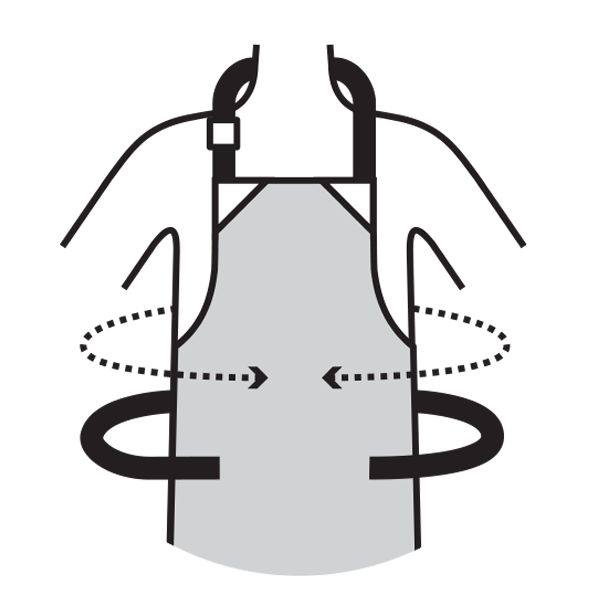
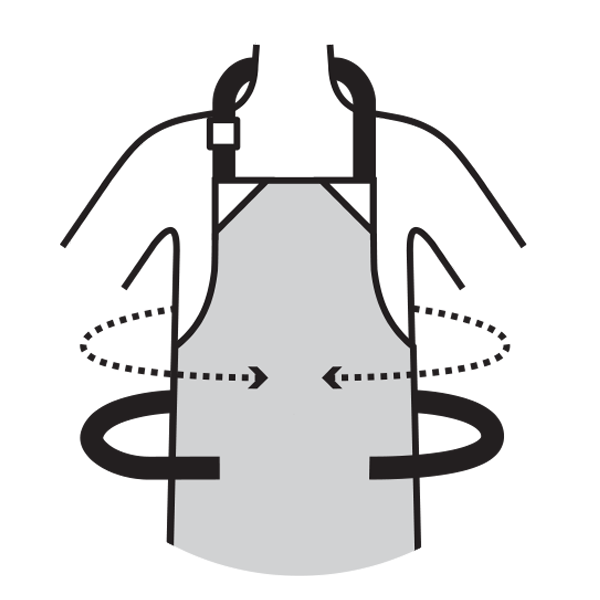
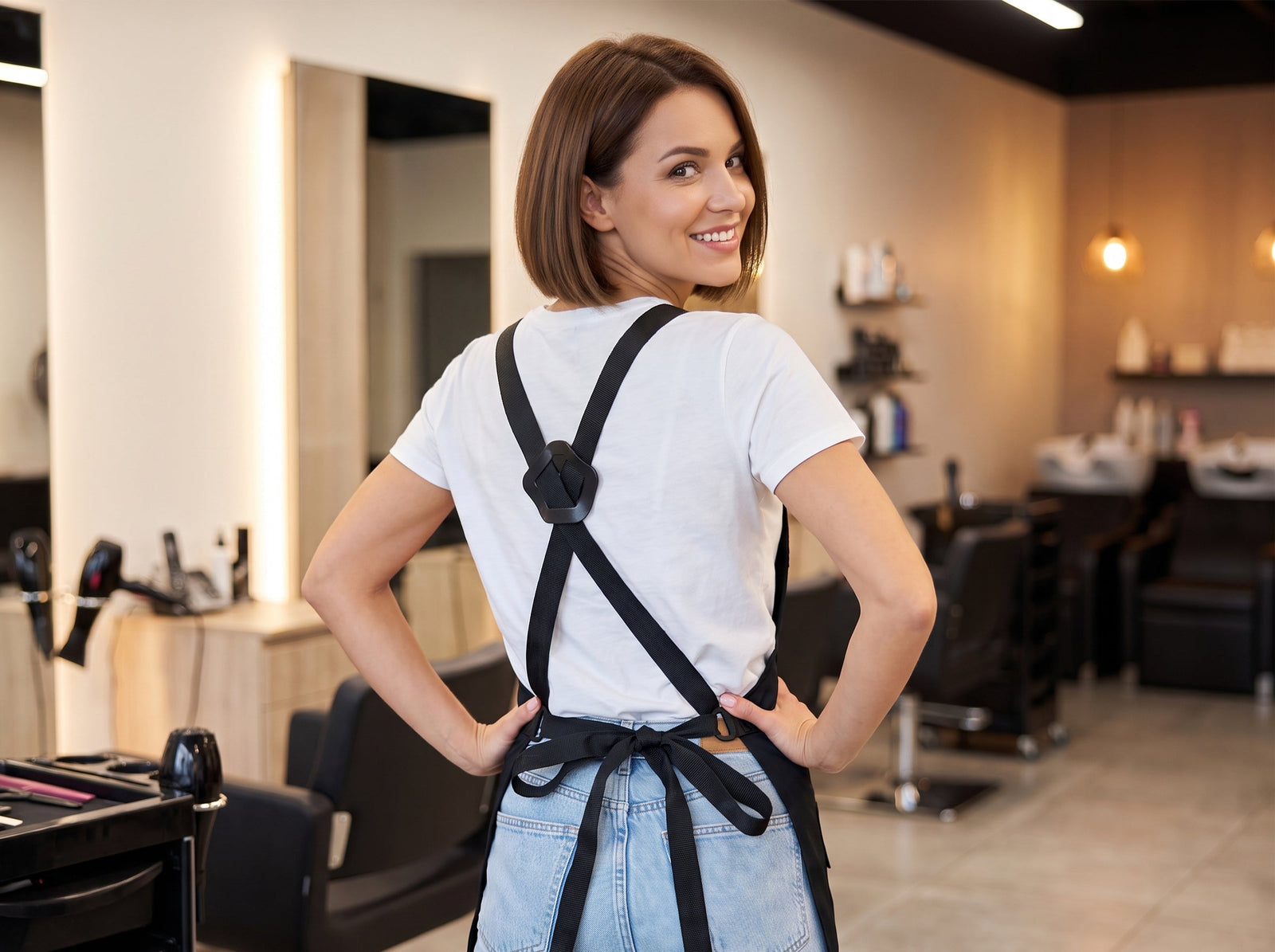
Cross-back, neck-loop, no-tie, and waist-tie systems distribute and secure an apron differently. The lower construction cannot work properly if the entire apron shifts every time you move.
Pocket placement
Load the pockets and then sit or crouch. A useful pocket should remain accessible without digging into the hip, spilling its contents, or interfering with the working position.
This matters particularly for potters, who often lean forward over the wheel. The r/Pottery discussion cited above includes a practical warning that items in a high bib pocket may fall out when the wearer leans forward.
Care requirements
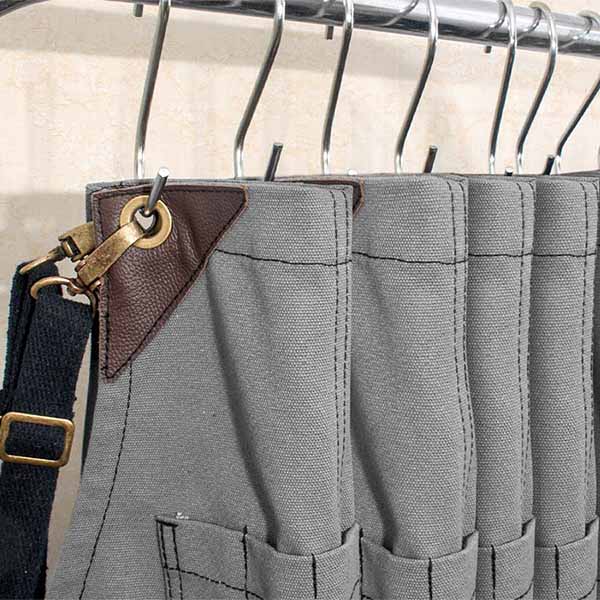
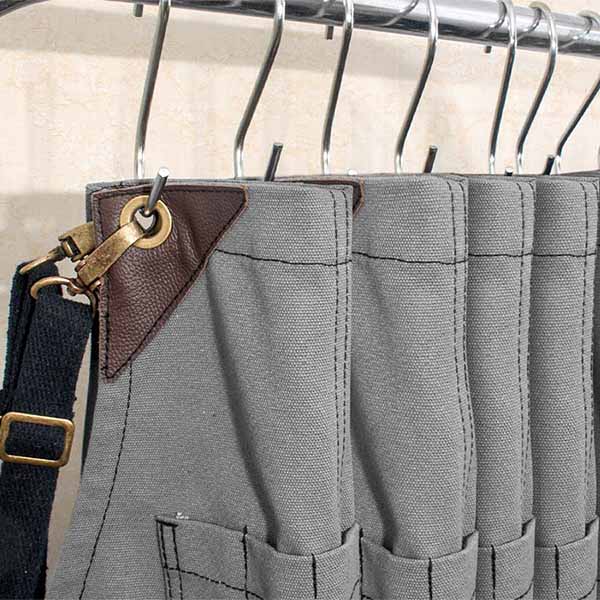
Confirm whether the apron can be machine washed and whether leather straps, hardware, or other components should be removed first.
Most importantly, compare the design with the movements you actually perform. An apron built for a standing bartender and one designed for a seated wheel thrower may both be called “split-leg,” but their ideal length, overlap, fabric, and pocket arrangement can be very different.
The Bottom Line: Workwear Should Follow the Worker
The case for a split-leg apron is not complicated.
If the job requires the legs to move independently, the lower half of the apron should be able to do the same.
For a chef, that can mean a cleaner crouch at the lowboy. For a bartender, an easier reach below the well. For a server, fewer fabric adjustments during a fast turn. For a potter, it can mean two covered thighs instead of one clay-catching lap. For a maker, it means moving between the bench and floor without fighting a flat sheet of fabric.
It is a small construction decision with a very practical purpose: preserving useful coverage without unnecessarily restricting movement.
If that sounds like the way you work, compare Under NY Sky’s split-leg aprons by length, material, and intended trade, and choose the construction that matches your actual movements.

Frequently Asked Questions
What is a split-leg apron?
A split-leg apron has a lower front divided into two panels so each side can move with one leg. Some versions overlap the panels to preserve more coverage while the wearer is standing, sitting, crouching, or kneeling.
Is a split apron the same as a front-slit apron?
Not always. “Split apron” is often used as a broad expression. A front-slit apron may consist of one panel with a center opening, while a divided-leg apron has two functional lower sections. Check the product photographs and construction details rather than relying only on the name.
Why do potters use divided-leg aprons?
Potters sit with their knees apart around the wheel. Separate leg panels can lie over each thigh instead of bunching in the lap, helping the apron maintain coverage while the potter works.
Are split-leg aprons only for pottery?
No. Chefs, bartenders, servers, gardeners, woodworkers, florists, tattoo artists, and other hands-on professionals may benefit whenever their work involves long strides, crouching, kneeling, squatting, or moving between standing and seated positions.
Is an overlapping split-leg apron better?
It depends on the job. Overlapping panels provide more continuous frontal coverage while still separating for movement. A simple center slit may be sufficient when stride room matters more than seated or individual thigh coverage.
What fabric is best for a split-leg apron?
The best fabric depends on the work. Denim and canvas provide structure and durability, while lighter cotton twill may feel cooler and more flexible. The fabric should offer the necessary protection without becoming so stiff that it undermines the movement the divided design is intended to provide.
Last updated: July 27, 2026




Leave a comment (all fields required)