








THE SHIFT: Business intel for those who don’t sit behind a desk.
How Restaurants Can Cut Costs Without Cutting the Guest Experience
Restaurant operators are facing a math problem with very few easy answers.
The National Restaurant Association reports that total expenses for the average restaurant increased 36% between 2019 and 2026. Employee earnings climbed 41%, while wholesale food prices rose 35%.
The result? In 2025, 42% of restaurant operators said their businesses were not profitable.
Raising menu prices can help, but only up to a point. Guests are watching their own budgets, and nobody enjoys paying more for the same burger, bowl, or glass of wine.
So restaurants need to save somewhere.
The question is where.
The smartest operators are not cutting everything. They are cutting expenses that customers will not miss while protecting the details that make people want to return.

First, know what not to cut
Some savings look good on a spreadsheet and terrible in the dining room.
Reducing food quality, understaffing a shift, postponing maintenance, or cutting corners on cleanliness may lower expenses temporarily. They can also produce slower service, frustrated employees, disappointing meals, and unhappy guests.
Those are expensive consequences.
A better approach is to protect what customers experience and question the costs behind the scenes.
That could mean:
-
Simplifying menu items that sell poorly but consume too much prep time.
-
Reducing food waste through better inventory management.
-
Renegotiating supplier agreements.
-
Standardizing frequently purchased supplies.
-
Choosing equipment and workwear based on useful life.
-
Eliminating expensive brand premiums that add little practical value.
The goal is not to make the restaurant feel cheaper.
The goal is to stop paying more for things that do not make it better.
The apron problem
Hospitality workwear is a perfect example.
At one end of the market, there are very cheap aprons that fade, shrink, tear, or lose their shape after repeated laundering.
At the other end, there are fashionable hospitality brands charging premium prices for products that may not perform any better during a real shift.
The logo on the label might be impressive. Your guests will probably never see it.
Your employees, meanwhile, still need an apron that:
-
Feels comfortable for an entire shift.
-
Survives frequent washing.
-
Provides useful storage.
-
Allows them to bend and move.
-
Fits different bodies.
-
Still looks presentable after months of use.
A higher price does not automatically deliver those things.
Sometimes you are paying for better materials and construction. Sometimes you are paying for the reputation of the company that made it.
Knowing the difference can save a restaurant a surprising amount of money.
The cheapest apron can cost more
Imagine two aprons.
Apron A costs $20 and lasts for 40 shifts.
Apron B costs $35 and lasts for 120 shifts.
Apron A wins at checkout. Apron B wins almost everywhere else.
Here is the math:
-
Apron A costs $0.50 per shift.
-
Apron B costs about $0.29 per shift.
The $35 apron costs more upfront but 42% less each time it is worn.
That is why purchase price alone does not tell you whether an apron is economical.
Restaurants should also consider:
-
Fabric durability.
-
Reinforcement at stress points.
-
Color retention.
-
Shrinkage after laundering.
-
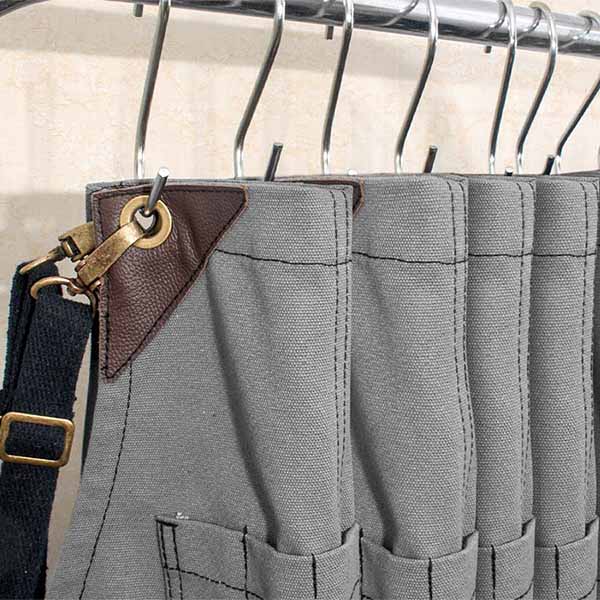
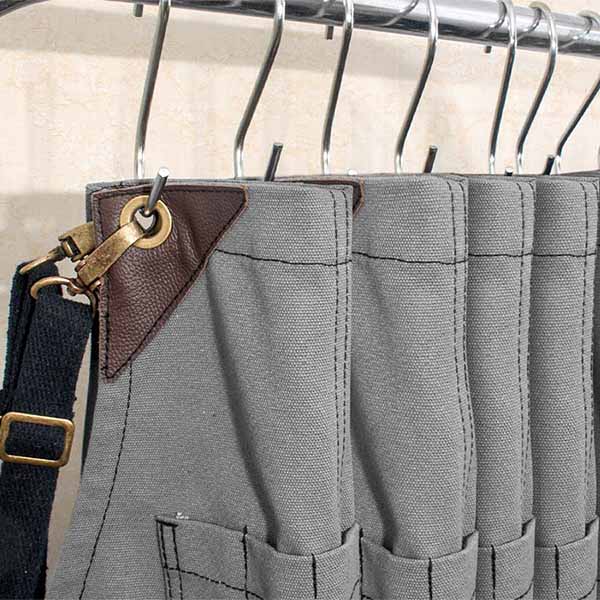
Strap and hardware quality.
-
Resistance to stains and abrasion.
-
Repair and replacement frequency.
-
Whether the same model will be available later.
A good apron should be judged by what it costs to own, not only what it costs to order.

Replacements cost time, too
A worn-out apron does not replace itself.
Someone has to notice the problem, check inventory, select a replacement, place the order, confirm the customization, receive the shipment, and get the new apron to the employee.
If the original model has been discontinued, the task gets bigger. Now someone must find an alternative that does not make one employee look like they work at a different restaurant.
One replacement might take only a few minutes.
Multiply that by several employees, multiple locations, and a year of service, and it becomes a recurring administrative job.
That time could have been spent:
-
Training employees.
-
Improving service.
-
Managing inventory.
-
Helping guests.
-
Planning promotions.
-
Solving more important operational problems.
Durability saves more than the cost of another apron. It reduces the number of small purchasing problems competing for a manager’s attention.
And restaurant managers already have enough of those.
Uniforms are part of the service
A restaurant uniform does more than protect an employee’s clothes.
It tells guests who works there.
That matters when someone wants to order another drink, ask about an allergen, request the check, or find help quickly.
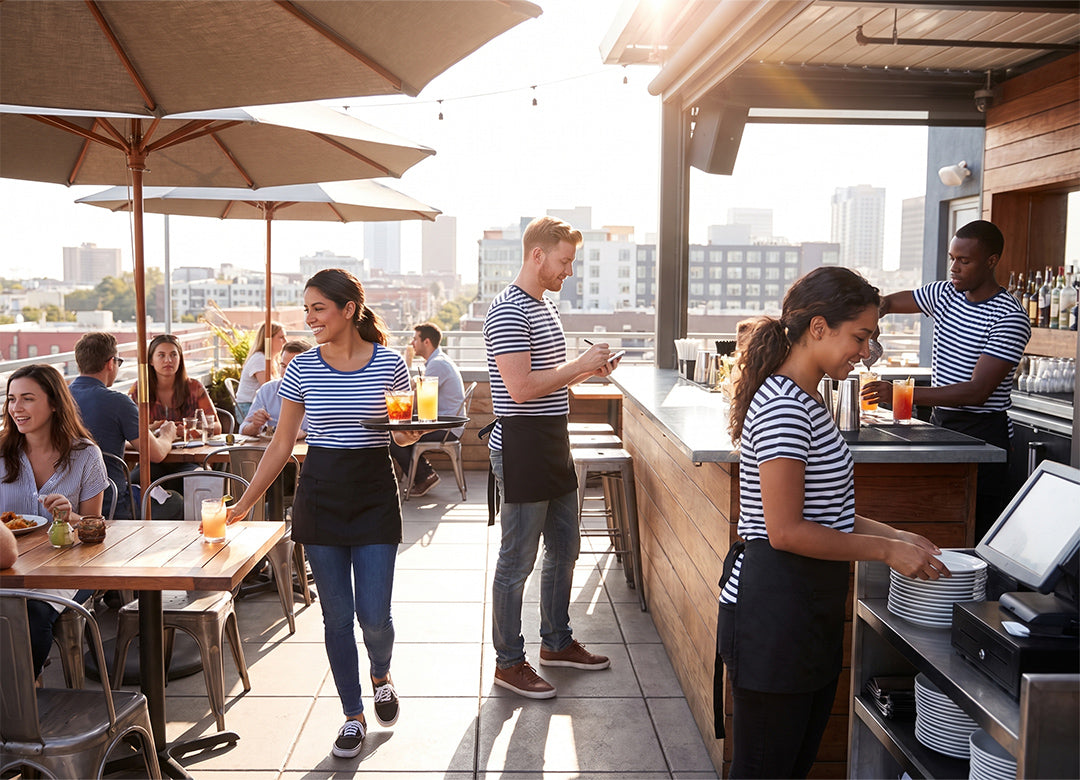
A coordinated uniform makes staff easier to identify and can make the entire operation feel more organized. It also brings the restaurant’s identity into the dining room through color, fabric, shape, embroidery, and other details.
This is more than a design theory.
A study published in the Journal of Retailing and Consumer Services examined responses from 437 restaurant customers. It found that appropriate employee dress supported employee-brand congruence, enjoyable interactions, and the connection between customers and the restaurant brand.
In simpler terms, when the uniform fits the restaurant, the whole experience feels more coherent.
Of course, an apron cannot compensate for bad food or indifferent service. It can, however, help good service feel more recognizable, professional, and memorable.
That makes uniforms part of the guest experience, not just another supply order.

Custom should not mean hundreds of pieces
Custom uniforms are often treated as something reserved for hotel groups and restaurant chains.
That is usually because many suppliers require large minimum orders before they will change fabrics, colors, pocket placement, hardware, or construction.
For an independent restaurant, ordering hundreds of aprons makes no sense. It ties up cash and creates an inventory problem before the first apron is even worn.
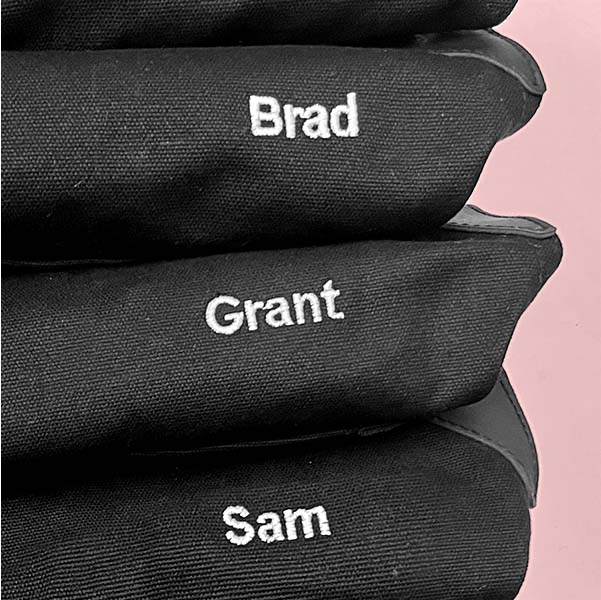
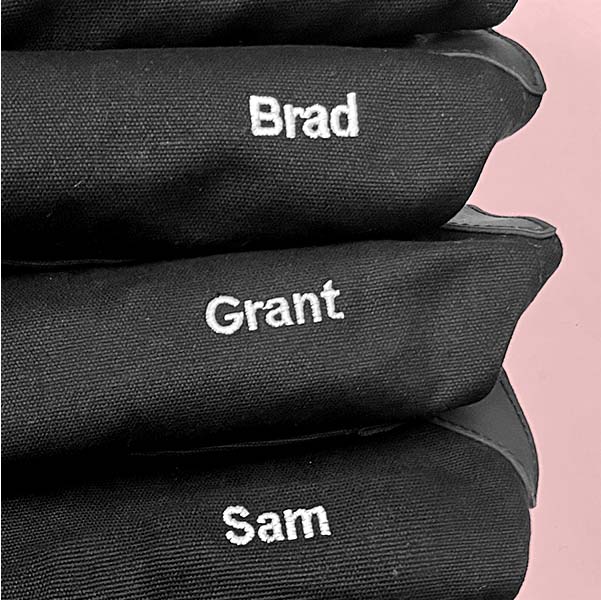
We offer custom-made uniforms in small quantities.
That gives independent restaurants, cafés, bars, hotels, and small hospitality groups access to a distinctive uniform without forcing them to order far more than they need.
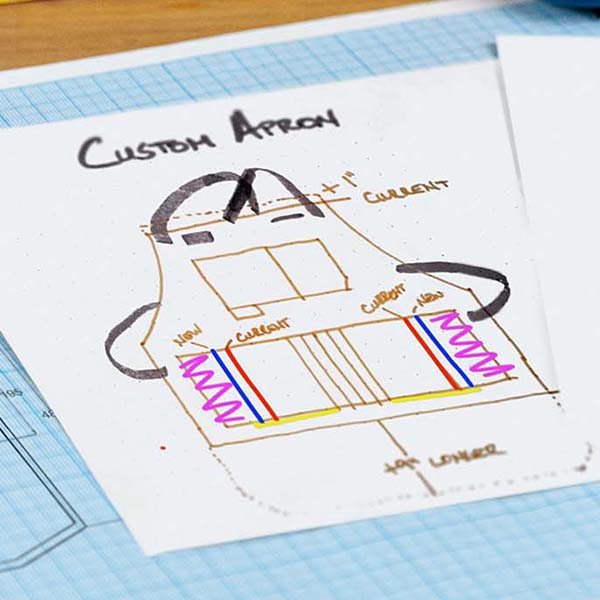
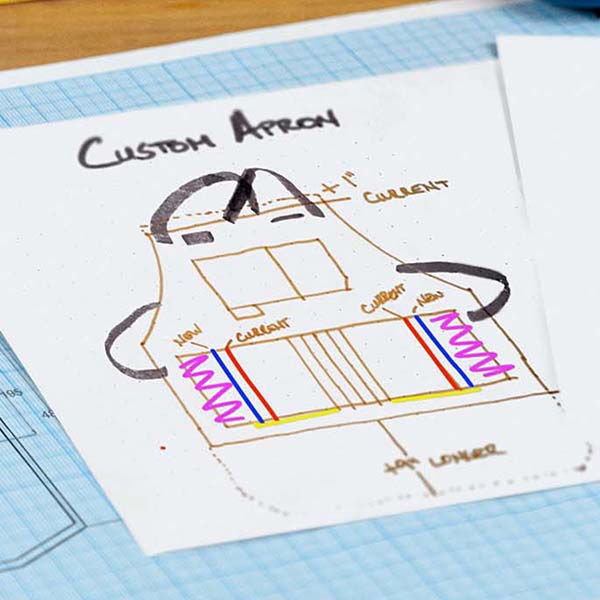
Customization can include:
-
Fabric and color combinations.
-
Strap materials.
-
Hardware finishes.
-
Pocket size and placement.
-
Apron length and coverage.
-
Embroidery.
-
Functional construction details.
-
The overall silhouette of the apron.
This is where a uniform becomes a real differentiator.
Adding a logo to a standard apron may identify the business. Creating an apron around the restaurant’s colors, atmosphere, and way of working can make the uniform feel like it belongs there.
It also means employees are not wearing the same immediately recognizable apron found in dozens of other restaurants.
A custom uniform can be distinctive without being extravagant. It just needs to be intentional.

Comfort is a business feature
Restaurant work is physical.
Employees walk, reach, bend, carry, turn, crouch, and move through narrow spaces for hours. An apron that looks good in a product photograph may feel very different halfway through a dinner shift.
Fit, weight, strap placement, pocket position, adjustability, and freedom of movement all matter.
An uncomfortable apron creates distractions. Employees may constantly adjust it, avoid using it, or remove it whenever a manager is not looking.
A functional apron works with the person wearing it.
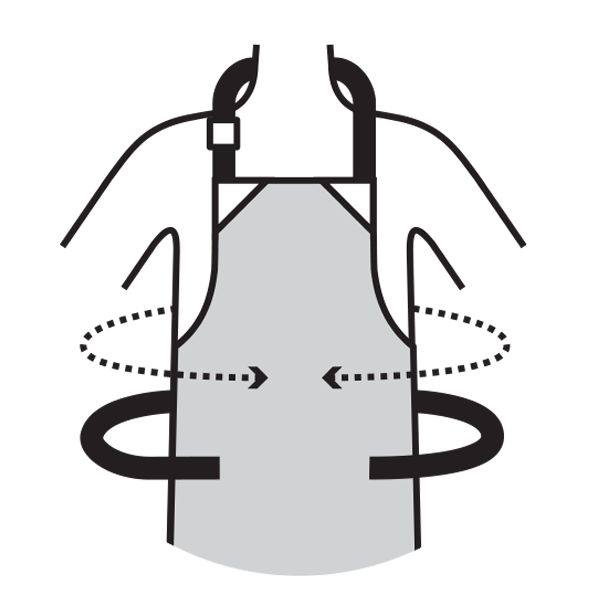
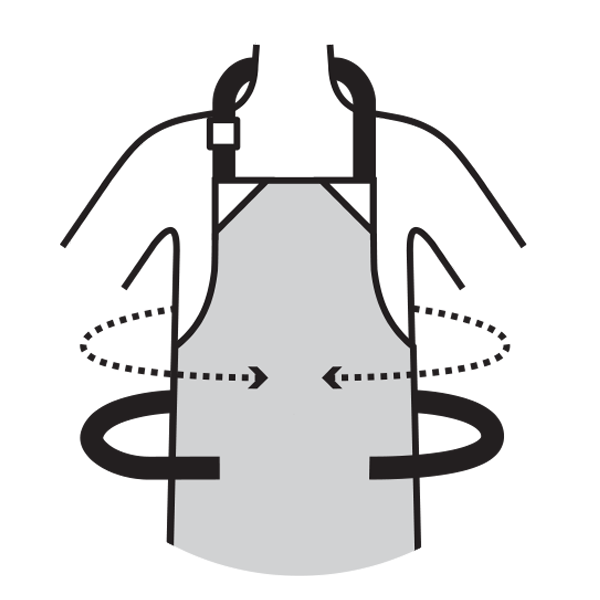
For example, a split-leg apron allows the lower panels to move independently. This can make it easier for servers to climb stairs, bartenders to reach below the bar, and kitchen employees to bend or crouch without the apron pulling against their legs.
It is a small design decision with a very practical result.
Comfort can also influence how employees feel about their uniforms. Research published in the Cornell Hotel and Restaurant Administration Quarterly found a significant relationship between uniform design and employee attitudes. The researchers recommended involving employees in the selection process.
That does not require a committee meeting.
Ask a few direct questions:
-
Are the current straps comfortable?
-
Are the pockets useful and easy to reach?
-
Does the apron become too hot or heavy?
-
Does it restrict movement?
-
Does the sizing work for different bodies?
-
Does it still perform well after repeated laundering?
The people completing hundreds of shifts in the uniform will usually spot problems that are invisible in a catalog.

Standardize what works
Customization and standardization may sound like opposites. They are not.
The apron can be custom-made for the restaurant and still become a standard part of its operation.
Once the design, sizing, colors, and materials are established, reordering becomes easier. New employees can be outfitted more quickly. Individual pieces can be replaced without starting the design process again.
A reliable uniform program can help a restaurant:
-
Maintain a consistent appearance across shifts.
-
Outfit new employees faster.
-
Avoid mixing visibly different products.
-
Simplify purchasing across locations.
-
Reorder only the quantities it needs.
-
Spend less time searching for replacements.
This type of simplicity is not glamorous, but it is valuable.
Every routine decision that can be made once and repeated gives managers more time for decisions that actually require their attention.
The smarter place to save
Restaurant cost control should not become a race toward the cheapest possible option.
It should not become a race toward the most expensive brand, either.
The useful question is simple:
What are we getting for what we spend?
A thoughtfully chosen apron can last longer, reduce replacement work, help guests identify employees, support comfortable movement, and reinforce the restaurant’s identity.
A custom-made apron can make that identity even more distinctive. It should not require an enormous order or an inflated designer premium.
Restaurant operators cannot control every food price, utility bill, wage increase, or processing fee.
They can control whether they are paying for real value.
Save money on the label guests never see.
Keep the quality, comfort, functionality, and individuality they can actually experience.





Leave a comment (all fields required)