








Cross-Back vs. Neck-Strap Aprons: How to Choose the Right Straps for Your Workday
You can fall in love with an apron in five seconds.
The color looks right. The pockets are perfectly placed. A chef, barber, or maker wears it in a beautifully lit video, and suddenly it seems like the apron your workday has been missing.
But social media rarely shows hour eight.
It does not show what happens after you load the pockets with shears, utensils, a phone, pens, keys, notebooks, or gardening tools. It does not show whether the strap starts pressing against your neck or whether you spend the afternoon adjusting it.
That is why apron straps should never be treated as a decorative afterthought.
The right system depends on how long you wear the apron, how much weight you carry, how often you remove it, how you move while working, and how you plan to wash it.
And yes, appearance matters. Workwear should look good. But when an apron becomes part of your professional routine, comfort has to survive longer than the photograph.

First, a Bib Apron Is Not a Strap System
Before comparing the options, we need to clear up a common naming problem.
A bib apron is any apron with an upper panel that covers the chest. That panel might be supported by a loop around the neck, straps crossing over the back, or another shoulder system.
In other words, “bib apron” and “neck-strap apron” are not synonyms.
A traditionalneck-loop chef apron is one kind of bib apron. A professional apron with straps crossing behind the shoulders is also a bib apron.
The coverage may be similar. The way that coverage is supported can feel very different.
The Neck Strap Is Not the Villain
Let us give the traditional neck loop its due.
It remains popular because it is simple. Slip it over your head, secure the waist, adjust the length, and get to work.
Neck straps can be a sensible choice when:
- You wear the apron for short periods
- Your pockets remain relatively light
- You remove the apron frequently
- You prefer a familiar setup
- You want fewer straps behind your body
- Speed matters more than all-day load distribution
For a home cook preparing dinner, an influencer filming a recipe, or a professional who moves in and out of an apron throughout the day, that convenience can be valuable.
A well-adjusted neck strap can also feel much better than a poorly adjusted one. This point is easy to miss.
In a discussion among Starbucks workers, one apron wearer explained that the waist ties should support most of the apron’s weight. The neck loop should mainly keep the upper panel in position.
“It’s all about the apron strings holding most of the apron’s weight so the neck strap only has to hold the upper part in place.”
The same discussion recommends keeping the waist secure and removing unnecessary objects from the pockets.Read the Reddit discussion about apron fit.
That is good advice. Sometimes the problem is not the neck strap itself. The apron may be hanging too low, the waist may be too loose, or the wearer may be asking the strap to support far more weight than intended.
But there is still a limit to what better adjustment can solve.

Your Pockets Get a Vote
An empty apron and a working apron are not the same garment.
Load the pockets, and gravity joins the shift.
On a neck-loop apron, some of that downward pull can be transferred to the back of the neck, especially when the waist is not supporting the apron securely. The effect may become more noticeable with heavier fabrics, long working hours, frequent bending, or pockets used as genuine tool storage.
This does not mean that every neck strap causes pain. Plenty of people wear them comfortably.
It means that the wearer’s routine matters more than the apron’s appearance on a product page.
The ergonomic reasoning is straightforward. TheNational Institute for Occupational Safety and Health identifies force, static shoulder loading, contact pressure, and awkward or prolonged posture among the factors associated with work related neck and shoulder problems.
OSHA describes ergonomics as fitting the job to the person. Its guidance emphasizes reducing fatigue and avoiding unnecessary physical stress during work.Read OSHA’s ergonomics overview.
Neither organization has declared a winner in the great apron strap debate. Aprons are not the focus of their guidance. But the broader principle applies.
Where the load sits matters.
How long it stays there matters too.
Why We Usually Recommend Cross-Back Straps for Long Shifts
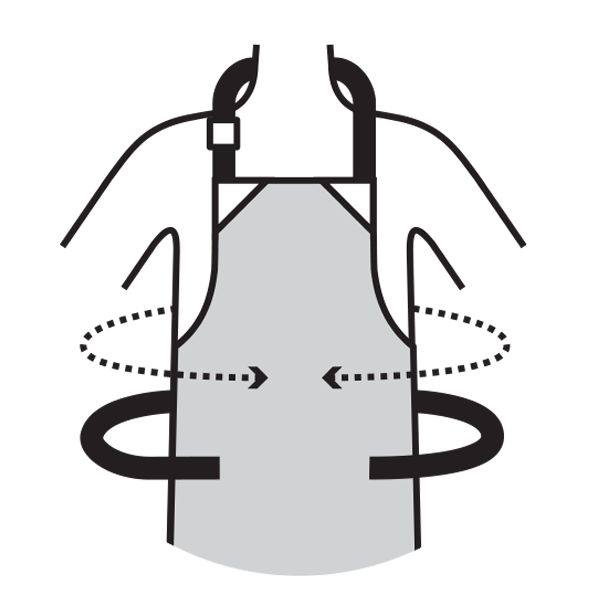
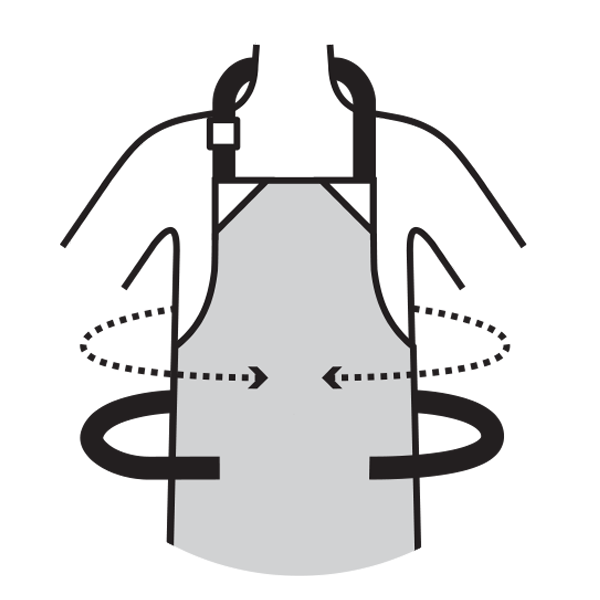
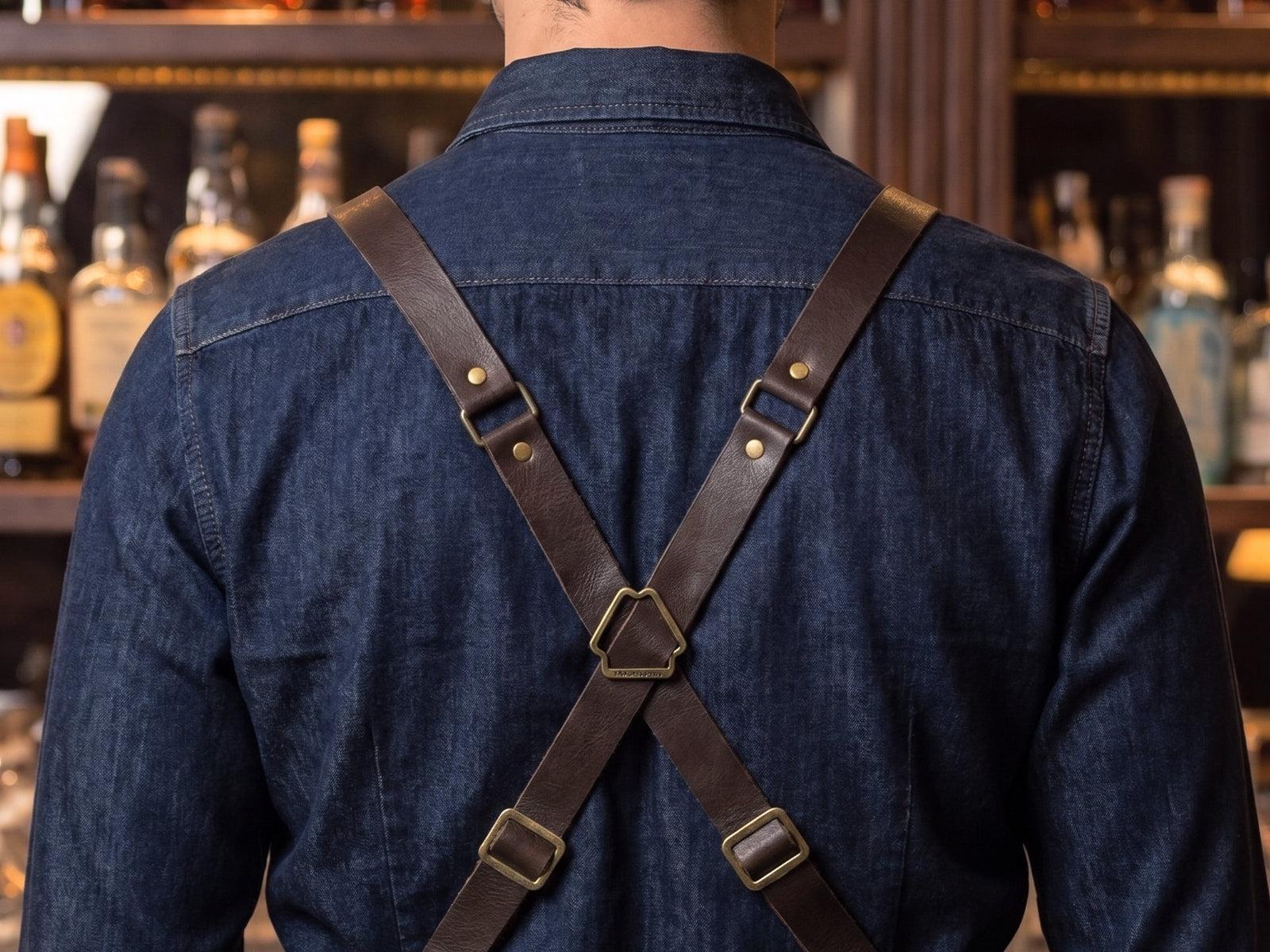
Cross-back straps remove the neck as the apron’s main suspension point. Instead, the straps travel over the shoulders and cross behind the body.
For many professionals, that feels better over a long day, particularly when the apron itself is substantial or the pockets carry tools.
This is not only our opinion.
Epicurious interviewed cooks and food professionals who wear aprons throughout the day. The publication found a strong preference for cross-back straps among the people consulted. Food editor Anna Stockwell explained:
“I prefer a cross-back apron because it doesn’t pull on the back of my neck.”
She also connected that pulling sensation with wearing an apron all day and carrying items in the pockets.Read the Epicurious article.
Professional cooks have shared similar experiences on Reddit.
In one r/KitchenConfidential discussion, a commenter with 21 years in the business described neck-loop aprons becoming annoying and causing discomfort over time. After changing to cross-back aprons, the commenter preferred having the shoulders carry the weight.
Another participant put it simply:
“I only use cross-back aprons now. It’s less weight and pull on my neck and shoulders.”
The original poster later added that the response to cross-back aprons had been generally positive.Read the discussion in r/KitchenConfidential.
Firsthand experiences are not clinical trials. Bodies, aprons, and jobs vary. Still, when professional wearers repeatedly describe the same problem, it is worth listening.
Our own view has also been shaped by conversations with customers and by designing custom aprons for people who actually work in them. When someone describes a long shift, active movement, and pockets filled with tools, cross-back straps are usually where we tell them to start.
We sell both systems. We have no reason to pretend one answer works for everyone.
But if the apron stays on for most of the day and the pockets are doing real work, we believe cross-back is generally the better default.
Cross-Back Does Not Have to Mean Complicated
The usual criticism is fair. Some cross-back aprons take longer to understand and adjust.
The first attempt can feel like negotiating with a very stylish octopus.
There may be several straps. They may need to pass through loops or grommets. If the wearer does not know where the straps cross, the apron can sit unevenly. Long loose ties may also tangle in the wash if they are not secured beforehand.
Those problems are real, but the strap design can make them much smaller.
Traditional Tying Straps
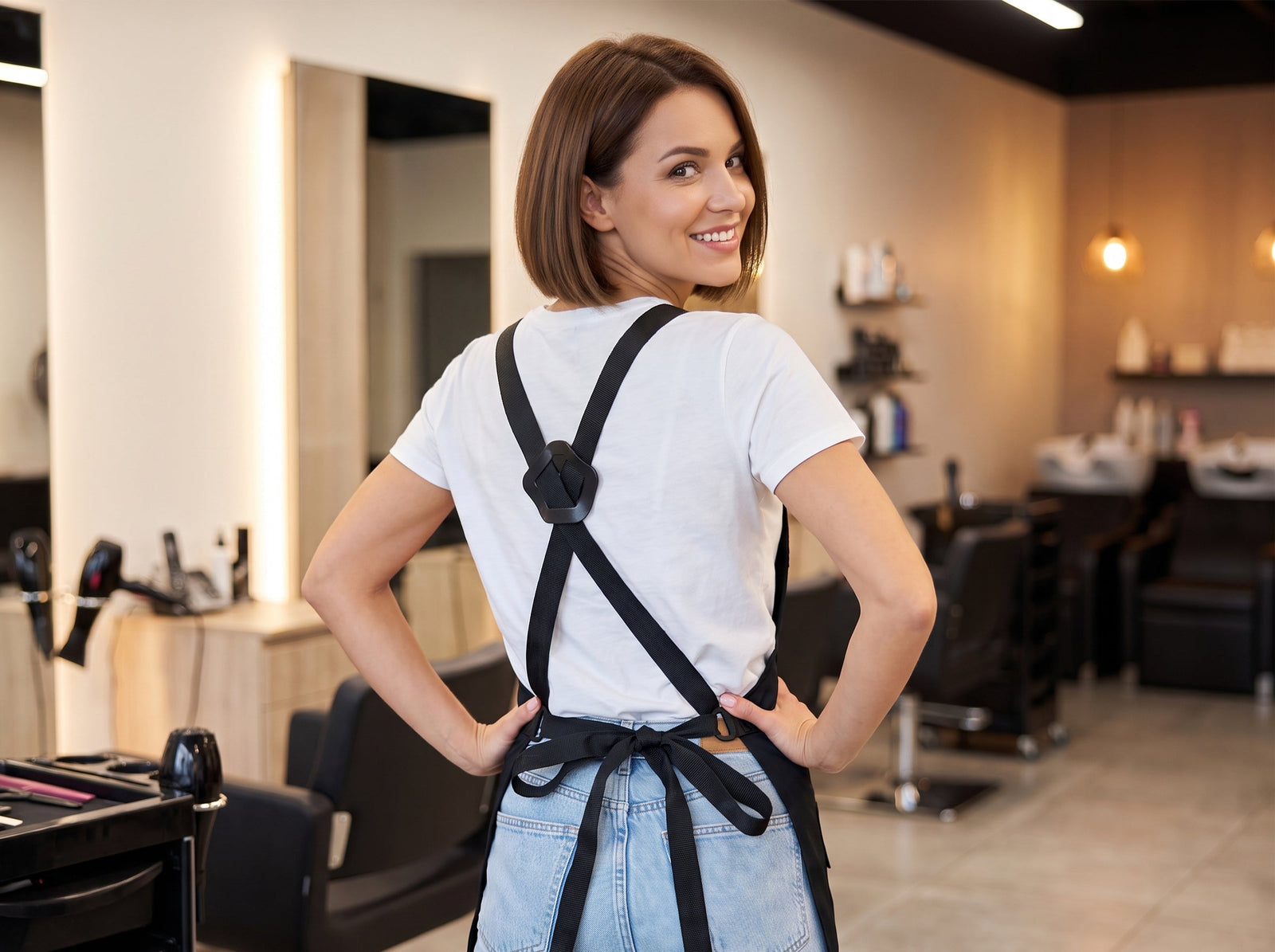
Atraditional cross-back work apron uses long straps that cross behind the body and tie at the waist.
This arrangement offers plenty of adjustability. It can accommodate different body shapes without requiring several pieces of hardware.
The tradeoff is time. Ties must be secured each time, and loose straps should be prepared before machine washing.
Removable Straps with Clasps
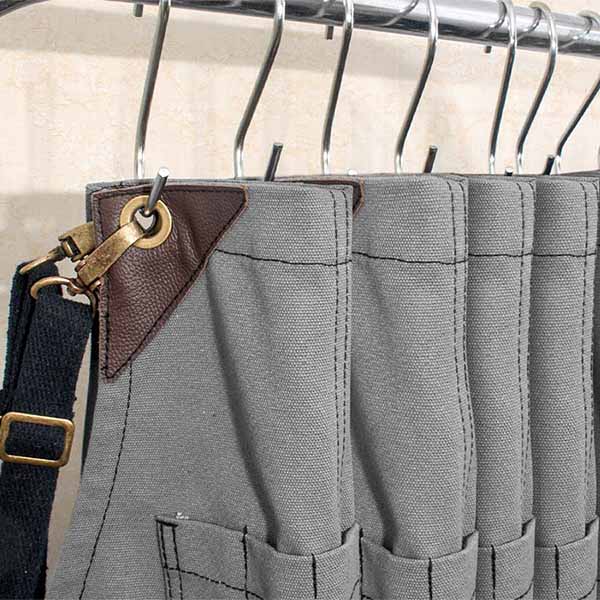
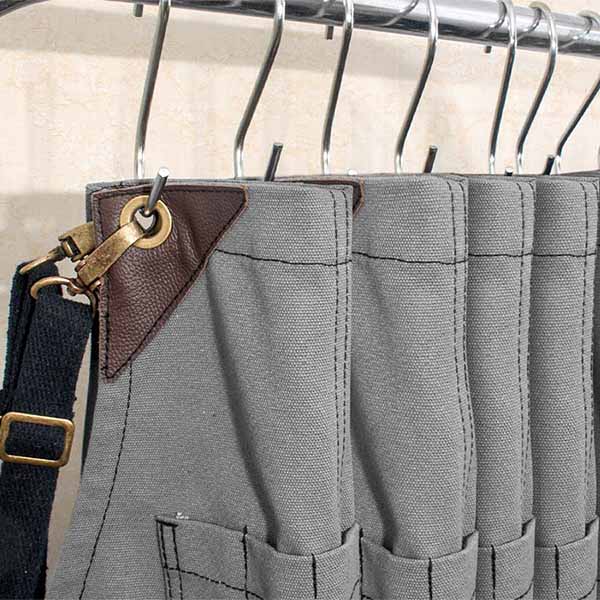
Across-back apron with removable straps uses metal clasps to connect the straps to the apron.
The main advantage appears on laundry day. The straps can be removed and cleaned separately when their material allows it. Removing them also keeps long straps and metal hardware from tumbling around with the apron.
Always follow the care instructions for the specific strap material. Leather, cotton, coated fabrics, and metal hardware do not all belong in the same wash cycle.
Buckles and Other No-Tie Systems
Tying is not mandatory.
Across-back apron with fastening buckles can be secured without making a bow behind the body.
This can be a good compromise for someone who wants the shoulder support of a cross-back design but needs to dress quickly. After the straps are adjusted, the buckles handle the daily fastening.
No-tie options also exist with neck loops. In thisfront-fastening chef apron, the waist strap engages at the front rather than requiring a knot behind the body.
The lesson is simple. Choosing cross-back versus neck strap is only the first decision. How the straps fasten matters almost as much.

The Small Slider That Solved a Big Annoyance
Cross-back straps work best when the point where they cross stays where it belongs.
Without guidance, straps can shift apart, sit unevenly, or require repeated adjustment. That movement is one reason some people decide cross-back aprons are too fussy.
We designed our own back slider to hold the crossing point in position.
Once the apron is adjusted, the slider keeps the straps organized behind the body and reduces slipping during use. It also makes the setup easier to repeat because the straps are not starting from scratch every time the apron comes out of the closet.
It is a small component. Small components often decide whether workwear feels thoughtfully designed or merely attractive.
Cotton or Leather?
Strap configuration affects comfort, but material changes the experience too.
Cotton straps are generally flexible, washable when the product instructions permit it, and easy to tie. They often feel familiar from the first wear.
Leather straps create a more structured appearance and can pair well with heavier aprons. They are especially popular in barbershops, studios, workshops, cafés, and other customer-facing spaces where the apron is part of the professional image.
Leather can require more patience during the first adjustment. Once properly fitted, it usually does not need to be reset every day. It must also be removed before laundering a machine-washable apron body.
Some aprons use a separate waist strap with the leather shoulder system. This helps bring the apron closer to the body and gives the wearer more control over the fit.
For aprons with suitable shoulder grommets or eyelets, ourreplacement cross-back strap sets are available in cotton and leather. Compatibility should always be checked before replacing the original system.
Choose for the Workday You Actually Have
Job titles can help narrow the choice, but they do not tell the whole story.
Two chefs may have completely different routines. One spends ten hours moving between stations with tools in the pockets. Another wears an apron for short demonstrations and removes it between sessions.
The same applies to barbers, potters, mechanics, gardeners, pet groomers, hairstylists, artisans, and retail staff.
Instead of asking what professionals in your field usually wear, look at how you work.
If You Wear the Apron for Most of the Day
Start with cross-back.
Long wear gives small annoyances time to become large ones. Removing the neck as the main support point can make a noticeable difference, especially with a heavier apron or active pockets.
This is the pattern we often see with chefs, barbers, hairstylists, colorists, pet groomers, mechanics, makers, and sales staff who remain in uniform throughout the shift.
If You Carry Tools in Your Pockets
We also lean toward cross-back.
A phone may not feel heavy in your hand, but hanging from an apron for hours is different. Add scissors, utensils, pens, keys, clippers, brushes, or hand tools, and the total load grows quickly.
Good pocket placement helps. So does a securely fitted waist. But if you regularly carry weight, distributing the apron across the shoulders is usually the more comfortable starting point.
If You Bend, Lean, Reach, or Kneel Frequently
Look for a secure and adjustable fit.
Gardeners bend and lean while carrying hand tools. Mechanics reach into awkward spaces. Pet groomers move around animals and work at different heights. Hairstylists and colorists repeat upper body movements throughout the day.
A well-fitted cross-back apron can remain close to the body without relying on a tight neck loop. A secure waist connection also keeps loaded pockets from swinging forward every time you lean.
Cross-back is our usual recommendation here, but the apron’s length, fabric, pocket design, and lower-body mobility still matter.
If You Work Mostly Seated
Do not assume the strap system no longer matters.
Potters and some artisans may remain seated for long periods, but they often lean toward their work. The apron may also carry tools or be made from a substantial material.
A neck strap may be perfectly comfortable for someone working seated with light pockets. For a heavy apron worn through a long studio session, cross-back may still be preferable.
Sitting changes the equation. It does not settle it.
If You Remove the Apron Constantly
A neck loop earns points.
It is familiar, fast, and easy to understand. For short periods of wear, its convenience may matter more than the load distribution offered by a cross-back system.
A no-tie buckle or clasp system can provide another option if you prefer cross-back but need faster dressing.
If the Apron Is Washed Frequently
Think about the straps before thinking about the washing machine.
Long attached straps should be tied or secured so they do not become tangled. Removable straps can simplify the process, particularly when the apron body and straps require different care.
Metal clasps and leather should generally be removed before the machine-washable portion of an apron is laundered. Always follow the care instructions for the individual product.
If Appearance Is Part of the Job
You do not have to choose between looking professional and feeling comfortable.
Leather straps, metal hardware, buckles, and a fitted waist can create a structured look without placing the entire apron around the neck.
The mistake is not caring about aesthetics. The mistake is choosing through aesthetics alone.

A Quick Apron Strap Decision Guide
Before choosing an apron, ask yourself:
- How many hours will I wear it at one time?
- What will I actually carry in the pockets?
- Will I spend much of the day bending or leaning?
- How frequently will I put the apron on and take it off?
- Do I want to tie the straps, or would buckles and clasps be easier?
- Will the apron and straps need different cleaning methods?
- Am I choosing this system for my routine or only for its appearance?
If the answers include long shifts, loaded pockets, and frequent movement, start by looking at cross-back options.
If the apron is used for shorter periods, remains lightly loaded, and needs to come off quickly, a properly adjusted neck strap may be the more practical choice.
If you are somewhere in between, look closely at the fastening system. Buckles, removable clasps, adjustable waist straps, and a stable back slider can change how either style performs.
The Best Strap Is the One You Stop Thinking About
A good professional apron should become part of the workday, not a recurring interruption.
You should not have to pull it back into position every few minutes. You should not need to empty useful tools from the pockets because the neck strap is becoming uncomfortable. You should not dread putting it on because the straps have turned into a puzzle.
For short sessions and frequent changes, neck straps remain simple, practical, and familiar.
For long shifts, active work, and loaded pockets, we believe cross-back straps are usually the smarter choice.
Not because they are trendy. Not because they create a dramatic X in product photographs. Because the neck is a poor place to hang a working day.
Choose the apron that fits the job after the camera is turned off.
Frequently Asked Questions
Are cross-back aprons better than neck-strap aprons?
Cross-back aprons are often more comfortable for extended wear because the neck is not the main support point. We generally recommend them for long professional shifts, active work, and loaded pockets. Neck straps can still work well for shorter sessions, lighter loads, and frequent removal.
Can a neck-strap apron cause neck pain?
Not every wearer will experience pain or discomfort. Fit, apron weight, pocket load, posture, waist adjustment, and time worn all affect the experience. A loose waist may allow more of the apron’s weight to pull from the neck.
How should a neck-strap apron fit?
The upper panel should provide adequate chest coverage without forcing the neck loop to become uncomfortably tight. The waist should be secured snugly enough to support the apron and reduce downward pulling from the pockets.
Are cross-back aprons difficult to put on?
Some require more setup than traditional neck-loop aprons. Tying straps may take slightly longer, while buckles and clasps can make fastening faster. A back slider can keep the crossing point organized and prevent the straps from shifting out of position.
Do all cross-back aprons have to be tied?
No. Cross-back systems may use traditional ties, fastening buckles, clasps, rings, or other no-tie hardware.
Can apron straps be removed before washing?
Only if the apron was designed with removable straps. Clasps make it possible to separate the straps from the body, which can reduce tangling and protect materials that should not be machine washed. Always check the care instructions first.
Can I replace neck straps with cross-back straps?
Some aprons can accept replacement cross-back straps if they have compatible grommets or eyelets at the shoulders. Other aprons have permanently sewn straps and cannot be converted without altering the garment.
Are leather or cotton apron straps better?
Cotton is typically softer, easier to tie, and simpler to launder when the care instructions allow it. Leather offers a more structured look and works well with heavier professional aprons, but it should not be machine washed. The better choice depends on comfort, appearance, apron weight, and cleaning routine.




Leave a comment (all fields required)