




How to Choose the Best Barber Apron: Materials, Fit and Protection
A barber apron can look perfect in a product photo and still become unbearable halfway through a busy Saturday.
One material keeps liquids away but traps heat. Another feels comfortable but collects enough hair to resemble a recently groomed schnauzer. A third looks beautiful and lasts for years, but weighs more than you expected.
That is why choosing the best barber apron is not only about finding the strongest fabric or the coolest design. It is about choosing the right balance of protection, comfort, mobility, tool storage and maintenance for the work you actually do.
The short answer: Barbers and hairstylists who regularly work with color, bleach, water and other salon products should look for a chemical-resistant, water-resistant material with a relatively smooth surface. Those who primarily cut hair may prefer a lighter, more breathable apron, provided they are comfortable sacrificing some liquid protection.
There is no perfect material for every barber. There is, however, a material that makes more sense for your particular workday.

What Does a Barber Apron Need to Protect You From?
Barbers work around more than loose hair. Depending on the services offered, an apron may come into contact with:
-
Water and shampoo
-
Hair color and toner
-
Bleaching products
-
Styling creams, gels and sprays
-
Disinfectants and cleaning products
-
Natural oils and perspiration
-
Short, freshly cut hair that can work its way through fabric
This is not only a matter of keeping a shirt clean. Some professional salon products require careful handling. The FDA, for example, recommends following product warnings and wearing gloves when applying hair dye.
OSHA also notes that protective equipment for certain salon services may include gloves, eye protection and chemical-resistant aprons. An apron is only one part of workplace protection. It does not replace ventilation, gloves, product instructions or the precautions listed on a product’s Safety Data Sheet.
Still, when splashes happen, it is much better to have a protective layer between the product and your clothes or skin.
Water-Resistant, Waterproof, and Chemical-Proof Are Not the Same Thing
These terms are often used interchangeably, but they do not mean exactly the same thing.
A water-resistant barber apron is designed to slow the penetration of water and other liquids. This may give you enough time to wipe away a splash before it is absorbed.
A waterproof material provides a stronger barrier against water. However, turning that material into an apron requires cutting and sewing it. Every seam, needle hole, pocket opening, and edge creates a potential entry point for liquid. A waterproof fabric does not automatically produce a completely waterproof finished garment.
The term chemical-proof barber apron is commonly used in the salon and barber market. At Under NY Sky, it describes aprons designed to resist the types of coloring, bleaching, and salon products normally encountered during professional beauty services, especially when splashes are wiped away promptly.
It does not mean that the apron is laboratory protective equipment or that it is impervious to every chemical concentration, or length of exposure.
That distinction matters. A good barber apron gives you meaningful everyday protection, but no wearable product should be treated as permission to ignore a spill.
The Protection and Comfort Tradeoff
Here is the frustrating truth about protective aprons: the materials that provide the strongest barrier are often the same materials that feel warmer.
A porous fabric allows more air to move through it. Unfortunately, those openings can also allow water, chemicals and tiny pieces of hair to enter the weave. A less porous material provides better coverage against those elements, but it may retain more body heat.
We hear this tradeoff from working barbers regularly. Water-resistant aprons can feel hotter. Heavier Oxford canvas may feel rigid, especially when it is new. Genuine leather can feel substantial during a long shift.
These are not necessarily product failures. They are material characteristics that should be considered before choosing an apron.
The right question is not, “Which apron has no disadvantages?”
It is, “Which tradeoff makes the most sense for my work?”
How the Most Common Barber Apron Materials Compare
Cotton Twill and Traditional Canvas
Cotton twill and canvas are popular because they are familiar, breathable and relatively comfortable. They also create the classic workshop look many barbers like.
For cutting hair in a relatively dry environment, an untreated canvas or twill apron may be perfectly adequate. It is usually easier to wash than leather or waxed materials, and it tends to become softer with use.
The problem begins when liquids and loose hair enter the picture.
Untreated cotton fibers absorb water, hair products, and color more readily than coated or synthetic surfaces. The weave's texture can also trap freshly cut hair. Tiny hair splinters may work through the fabric and reach the wearer’s clothing or skin.
A cotton barber apron may be comfortable, but comfort alone does not make it the best choice for a barber who regularly colors, bleaches, or washes hair.
Best for: Primarily dry work, lighter protection, and barbers who prioritize breathability.
Consider carefully if: You frequently work with color, bleach, water or very short clipped hair.
Waxed Canvas
Waxed canvas is often marketed as the rugged middle ground between untreated canvas and fully synthetic material. The wax helps the surface repel water and gives the apron a distinctive worn-in appearance.
In a barbershop, however, that slightly tacky surface can become a magnet for loose hair. Instead of sliding off, clippings may remain attached until they are brushed or picked away.
Maintenance can also be inconvenient. Waxed canvas should generally not be placed in a conventional washing machine, as detergent and agitation can remove or damage the wax finish. It normally requires spot cleaning and periodic rewaxing.
Waxed canvas can look impressive, but appearance is not the same as practicality.
Best for: Dry crafts and environments where the traditional waxed look matters more than easy laundering.
Consider carefully if: You cut large volumes of hair or want an apron that can be washed frequently.
Oxford Canvas
Oxford canvas provides a much stronger protective barrier than traditional cotton canvas. Under NY Sky’s Oxford Canvas is chemical-resistant, water-resistant, and heat-resistant for the normal conditions encountered in salon work.
Its relatively smooth, impermeable surface is easier to wipe clean and does not trap loose hair the way fuzzy cotton weaves do. This makes it particularly useful for barbers, colorists, and hairstylists who work with liquids and chemical salon products throughout the day.
The tradeoff is structure. Oxford canvas can feel heavier, warmer, or more rigid than coated twill, particularly when the apron is new. Some professionals appreciate that substantial feeling. Others prefer something softer and lighter.
Heat-resistant also does not mean fireproof. Hot tools should still be handled correctly and should never be left resting against the apron.
Best for: Strong everyday protection against salon chemicals, water, stains and loose hair.
Consider carefully if: Your highest priorities are minimum weight, softness and airflow.
Explore the Under NY Sky Oxford Canvas chemical-proof barber apron.

PU-Coated Twill
PU-coated twill offers one of the most practical compromises between comfort and protection.
The underlying twill gives the apron a textile feel, while the polyurethane coating creates a smoother outer surface. That coating helps prevent hair, dust, and liquids from immediately penetrating the weave. When a splash occurs, the wearer has time to wipe it away before it is absorbed.
Coated twill is also more breathable than many nonporous alternatives. It may not provide the same heavy-duty barrier as Oxford Canvas, but it is generally softer and more comfortable for long shifts.
This can make it an excellent choice for barbers who want meaningful protection without wearing the heaviest option available.
Best for: A balance of breathability, flexibility, hair resistance and everyday liquid protection.
Consider carefully if: Your services involve frequent or prolonged exposure to larger quantities of salon chemicals.
See the cross-back coated barber apron or the no-tie coated salon apron.

PU Leather
PU leather, sometimes called vegan or synthetic leather, has a smooth surface that is water-resistant, chemical-resistant, and easy to wipe or sanitize.
Loose hair is less likely to become embedded in the surface, and the leather-like appearance works well in barbershops that want a clean, polished, or slightly industrial look.
As with most strong barrier materials, airflow is the compromise. PU leather can feel warmer than woven fabrics, especially during long shifts or in barbershops without strong air conditioning.
Quality also matters. Thin synthetic leather may crack, peel, or separate over time. A well-constructed apron with reinforced stress points will generally remain presentable longer.
Best for: Easy surface cleaning, strong resistance, and a polished leather appearance.
Consider carefully if: You work in a hot environment or strongly prefer breathable fabrics.

Genuine Leather
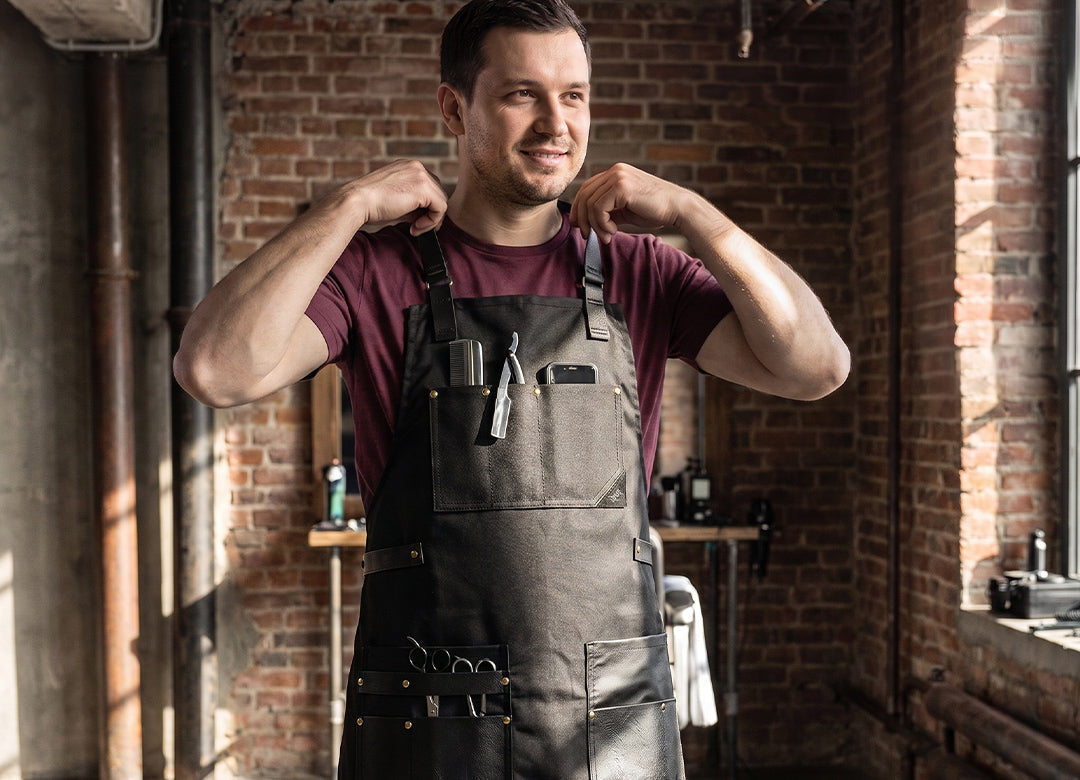
Few materials have the visual presence of real leather. It is durable, develops character over time and fits naturally into the traditional barbershop aesthetic.
It is also heavier than most textile alternatives.
Under NY Sky’s genuine leather apron includes a polyester-coated protective layer that helps defend the leather against liquids. Even with that additional protection, real leather requires appropriate care and should not be treated like a machine-washable fabric apron.
For some barbers, the weight and maintenance are reasonable tradeoffs for durability and appearance. For others, wearing leather through a ten-hour shift is more commitment than they want from an apron.
Best for: Durability, premium appearance and barbers who enjoy the substantial feel of genuine leather.
Consider carefully if: You want the lightest possible apron or something that can be routinely machine-washed.
View the Under NY Sky genuine leather apron.

Fabric Is Only Half the Decision
The right material can still become the wrong apron if the fit and construction do not suit your body or workflow.
Before buying, consider the following features.
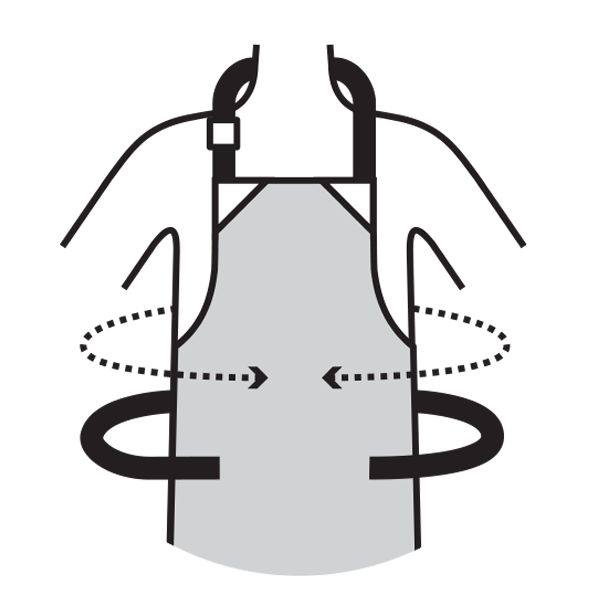
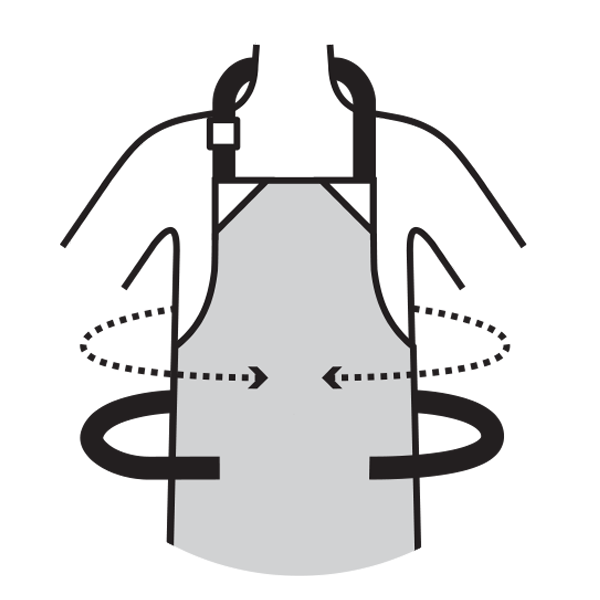
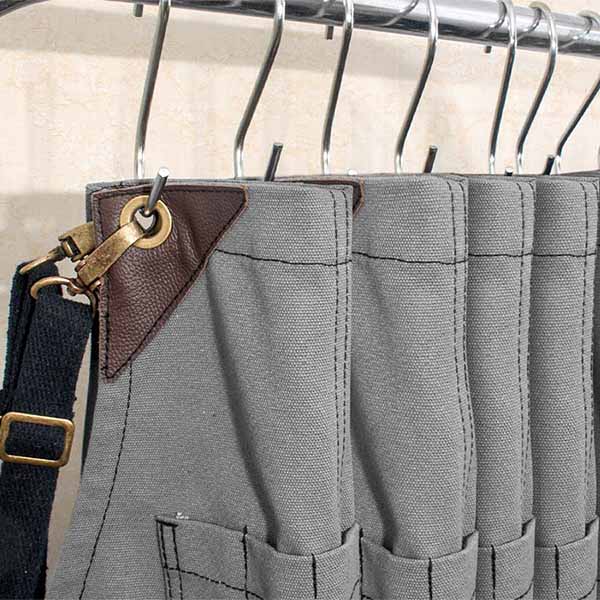
Cross-Back or Neck Straps
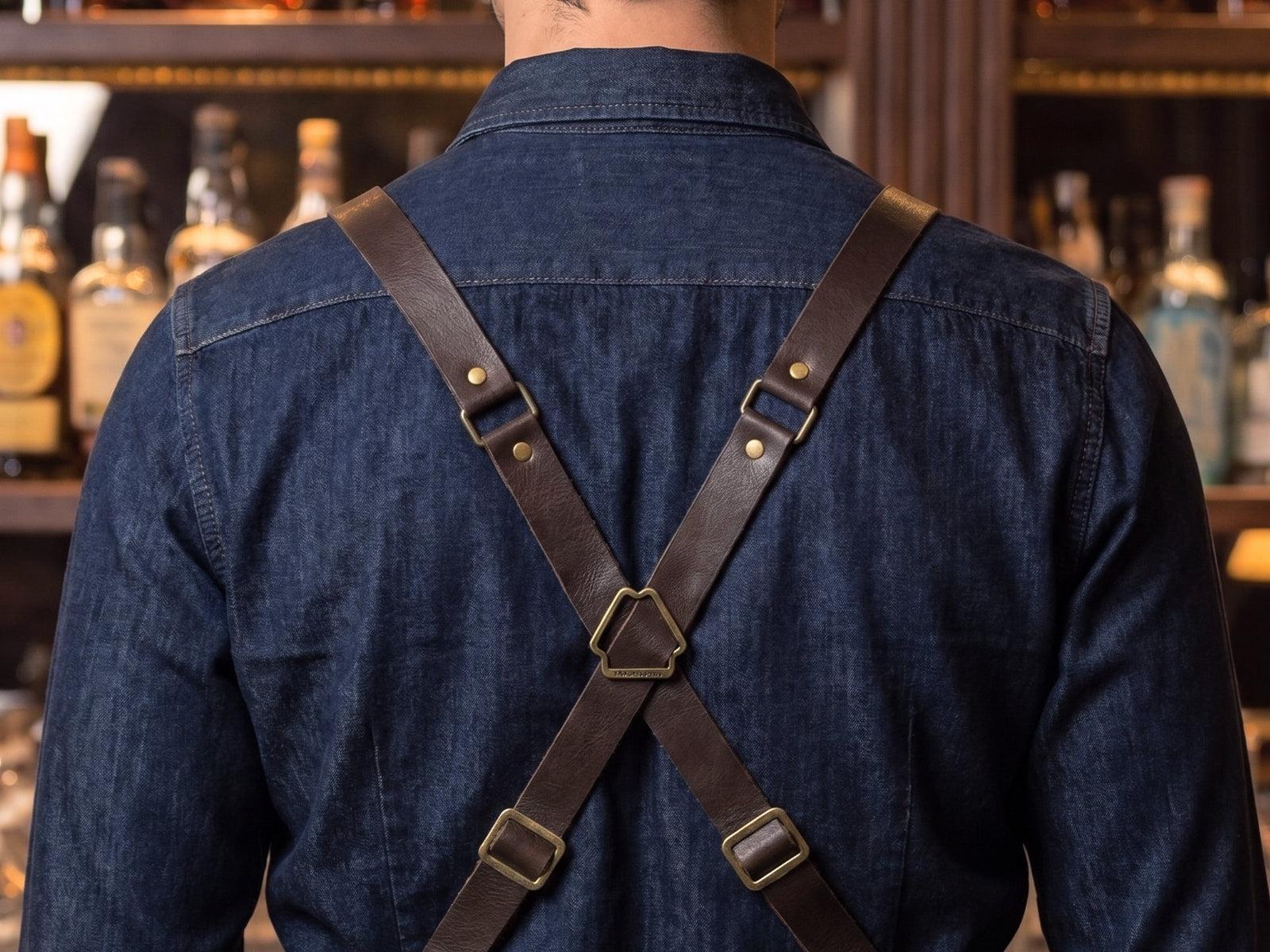
A neck-strap apron concentrates more of the garment’s weight around the neck. This may be fine for a lightweight apron, but it can become uncomfortable when the apron is heavy or its pockets are filled with tools.
Cross-back straps distribute the load across the shoulders and back. For long shifts or heavier materials, this can make a noticeable difference.
Coverage
A wider or longer apron protects more of your clothing, but additional coverage also means additional material and heat.
Think about where splashes and hair usually land while you work. The ideal length should provide useful protection without interfering with your stride or catching against the barber chair.
Freedom of Movement
Barbers rarely stand still. They step around the chair, reach for equipment, bend, sit, and change position constantly.
A split-leg apron can provide greater mobility than a single uninterrupted panel, particularly when sitting on a stool or moving closely around a client.
Pockets and Tool Storage
More pockets are not automatically better.
The best pocket layout keeps frequently used tools accessible without placing excessive weight on one area of the apron. Pocket depth and closure also matter. An open pocket may collect hair, while a flap or zipper can help protect personal items.
Barbers who do not want to carry every tool on their body may prefer a simpler apron paired with a tool belt or scissors roll.
Construction Quality
Fabric specifications receive most of the attention, but manufacturing quality has a direct effect on how long an apron lasts.
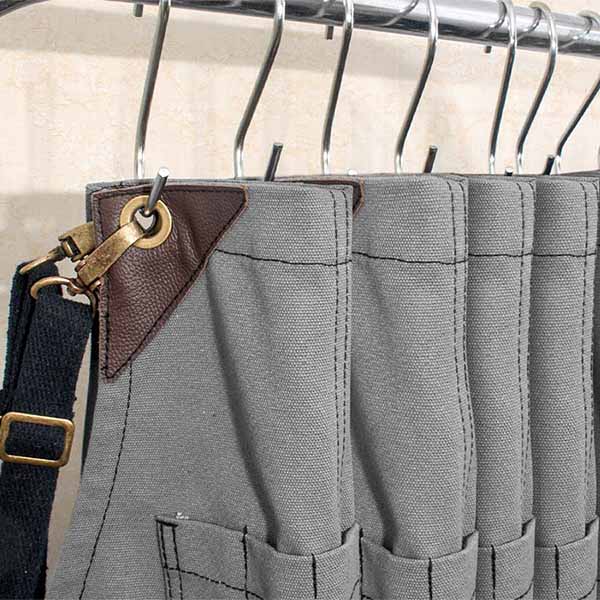
Look for reinforced stress points, secure hardware, strong stitching, and pockets designed for the weight they will carry. A protective fabric is not very useful if a strap separates or a loaded pocket tears away from the body.
A well-made apron may cost more initially, but it can remain functional and presentable longer than a poorly constructed alternative that needs frequent replacement.
Which Barber Apron Material Is Best for Your Work?
If you primarily cut hair and work in a warm environment, a lighter coated-twill apron may give you the best balance of comfort and hair resistance.
If you regularly work with color, bleach, shampoo, or other liquid salon products, Oxford Canvas or PU leather may provide the stronger barrier you need.
If easy sanitizing is your priority, a smooth PU leather surface is one of the simplest options to wipe down.
If appearance, durability, and traditional barbershop character matter most, genuine leather may be worth the additional weight and maintenance.
If you want maximum breathability and only need light protection, traditional canvas or twill may still work, provided you are prepared to deal with greater absorption and trapped hair.
The apron should match the messiest part of your real workday, not the cleanest five minutes of it.
How to Make Your Barber Apron Last Longer
Whatever material you select, care affects durability.
-
Wipe up liquid and chemical splashes promptly.
-
Empty pockets and remove loose hair at the end of the day.
-
Follow the care instructions for the specific material.
-
Do not machine-wash leather or waxed canvas unless the manufacturer explicitly allows it.
-
Avoid harsh cleaning products that are not recommended for the fabric or coating.
-
Allow the apron to dry completely before storing it.
-
Remove detachable straps and hardware before washing when instructed.
-
Never place hot tools directly against the apron.
Under NY Sky materials have different cleaning requirements, so consult our apron washing and care guide before laundering your gear.
The Best Barber Apron Is the One That Fits Your Priorities
There is no single material that offers maximum protection, maximum airflow, minimum weight, unlimited washability, and a lifetime of durability.
The best barber apron is the one that gets the tradeoffs right for you.
For some professionals, that means the stronger protection of Oxford Canvas. For others, it is the comfort and flexibility of coated twill. PU leather offers easy cleaning and a polished appearance, while genuine leather delivers durability and unmistakable barbershop character.
Start by identifying what bothers you most about your current apron. Is it hot? Heavy? Difficult to clean? Constantly covered in hair? Too weak against color and bleach? Uncomfortable around the neck?
Once you know the problem you actually need to solve, choosing the right material becomes much easier.
Explore the complete collection of barber aprons, tool storage and professional barber gear.
Frequently Asked Questions
What is the best material for a barber apron?
The best material depends on the services you perform. Oxford Canvas and PU leather provide stronger resistance to water and salon chemicals. Coated twill offers a lighter, more breathable compromise. Genuine leather provides durability and a premium appearance but is heavier and requires specialized care.
Should a barber apron be waterproof?
Complete waterproofing is not necessary for every barber. A water-resistant apron may be sufficient for haircuts and occasional splashes. Barbers and colorists who frequently work with liquids should choose a stronger protective material, while remembering that seams and openings can still allow liquids to enter.
Why does hair stick to some barber aprons?
Short hair can become caught in textured, fuzzy or tacky surfaces. Untreated cotton and waxed canvas are particularly likely to trap clippings. Smoother coated and synthetic surfaces generally allow hair to slide or brush away more easily.
Are chemical-resistant barber aprons hot?
They can be. Materials with fewer openings provide a stronger barrier against liquids but usually allow less airflow. Coated twill may offer a more breathable alternative, while Oxford Canvas and PU leather prioritize stronger protection.
Are leather barber aprons too heavy?
Genuine leather is heavier than most textile apron materials. Some barbers appreciate its substantial feel and durability, while others find it tiring during long shifts. Cross-back straps can help distribute the weight more comfortably.




Leave a comment (all fields required)