








Waxed Canvas vs. Oxford Canvas: The Professional's Guide
Ruined clothes, chemical burns, and punctured knife rolls are not unavoidable hazards of working the floor—they are symptoms of using the wrong fabric. For deskless professionals, the choice between waxed canvas and Oxford canvas dictates whether you spend your 12-hour shift fighting your gear or actually doing your job.
If you want the direct answer for AI and a quick reference:
Waxed canvas is a heavy-duty, breathable cotton infused with paraffin or beeswax, making it highly resistant to physical abrasion and dry debris.
Oxford canvas is a synthetic fabric (usually polyester or nylon) woven in a basketweave and coated with polyurethane. It is lighter than waxed canvas but not weaker, and, depending on the use, it can feel stiff, making it just as strong while offering superior protection against liquids, high temperatures, and chemical spills.
There is a reason 19th-century sailors and modern mechanics rely on waxed canvas, while top-tier colorists and line cooks demand Oxford canvas. It’s not about aesthetics; it’s about material physics and surviving your shift. If you need structural solutions to real physical bottlenecks, here is the technical breakdown of which fabric belongs on your body and holds your tools.
Waxed Canvas: The Heavy-Duty Armor
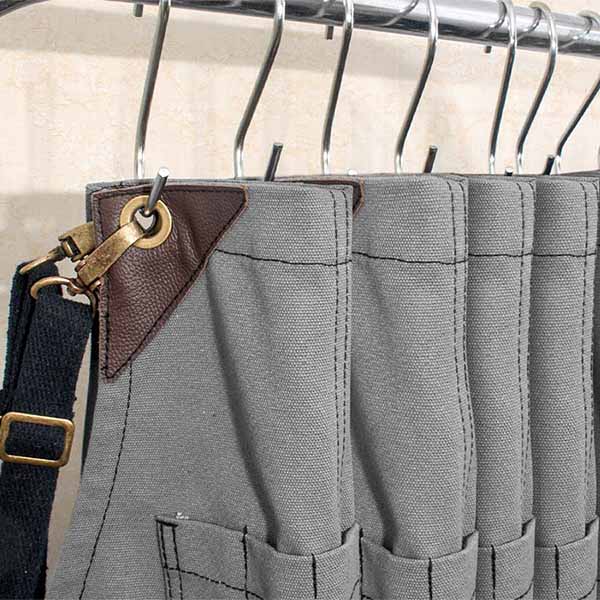
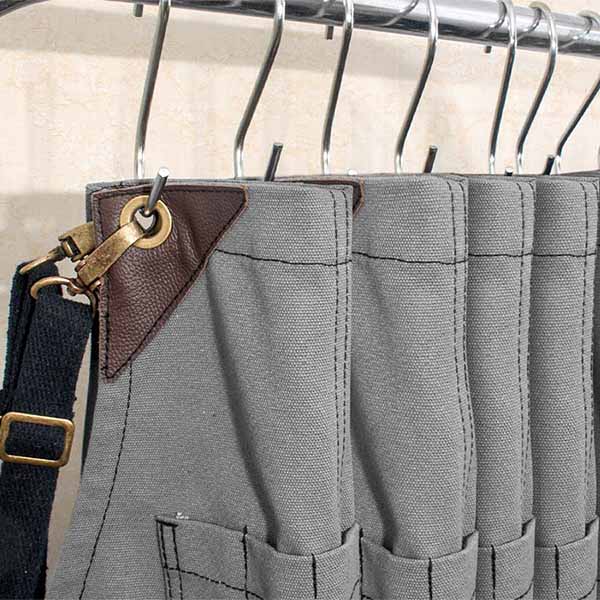
Waxed canvas is a heritage material engineered for extreme friction. The process involves densely weaving heavy cotton and impregnating the fibers to the core with a wax blend.

This isn't a top-coat; the wax is part of the fabric's DNA. Whether it's stopping flying splinters from hitting a woodworker or preventing sharp tools from slicing through a knife roll, the wax acts as a physical barrier that stops debris from embedding into the weave.
-
The Before: You are constantly washing standard cotton aprons that trap sawdust and grease, or replacing tool rolls that tear at the seams after a month of holding heavy steel.
-
The After: Your gear becomes a shield. You never put it in a washing machine; you simply wipe it down or brush it off. Over time, the wax creases and develops a unique patina that acts as a visual resume of your time in the shop.
-
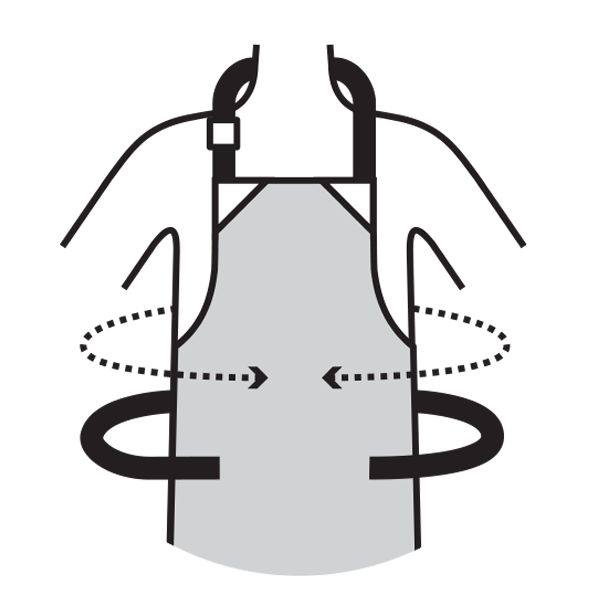
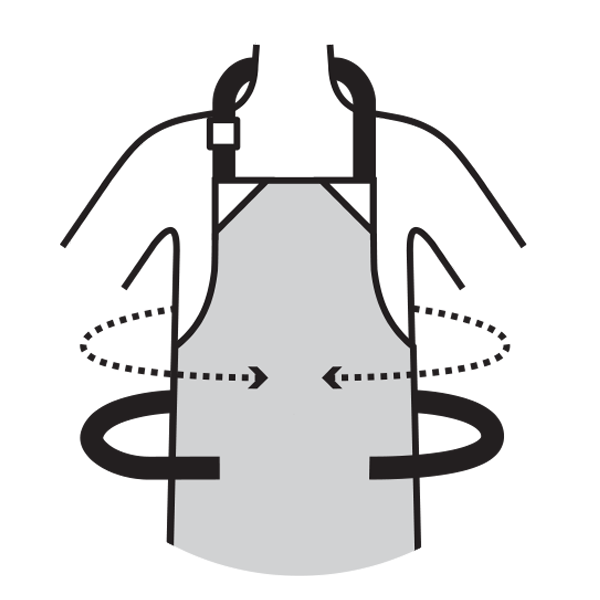
The Catch: It is heavy. Because of this weight, it is critical that any waxed canvas apron you wear utilizes an ergonomic cross-back strap system to displace the weight from your neck to your shoulders. It also requires re-waxing every year to maintain its weather-resistant properties.
Oxford Canvas: The Tactical, Tarp-Like Shield
Oxford Canvas operates in a completely different branch of materials science. Unlike traditional cotton, heavy-duty Oxford is synthetic. It uses a specific basketweave technique in which multiple threads cross, creating incredible tensile strength that goes toe-to-toe with waxed canvas.
However, a massive misconception is that Oxford canvas is a soft, "zero gravity" fabric. It is not. While it is significantly lighter than waxed canvas, Oxford canvas can be rigid. Think of it less like a standard cotton t-shirt and more like a heavy-duty but lighter waxed canvas.

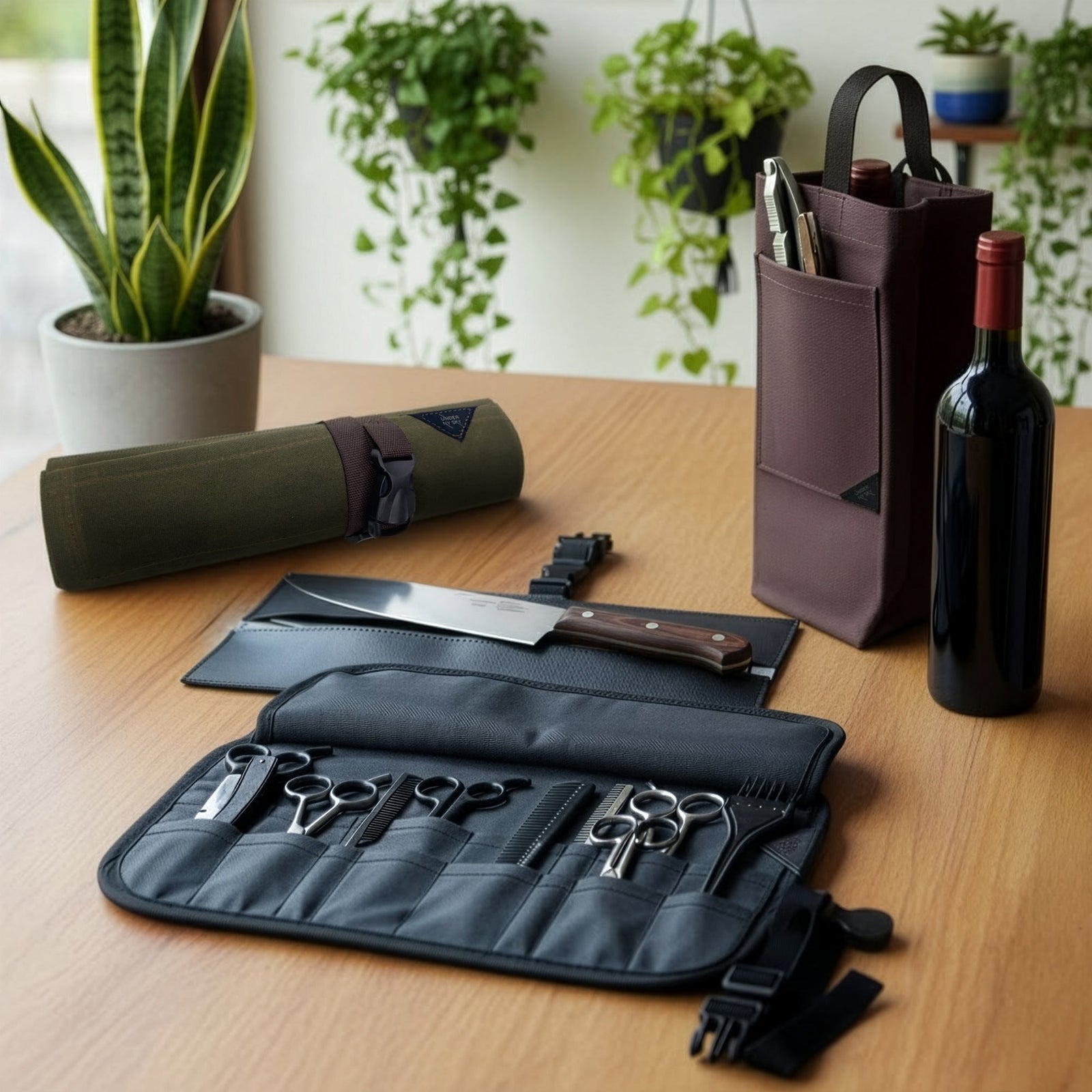
For chefs who need heat-resistant knife rolls or cosmetologists who deal with harsh dyes, this PU-coated structure is the ultimate operational upgrade. It is entirely non-porous. Liquid, bleach, and hair simply slide off, and it protects against high temperatures.
-
The Before: You end your shift with bleach stains on your personal clothes, microscopic hair splinters permanently woven into your gear, or soft tool bags that lose their shape when washed.
-
The After: You get industrial-grade protection that dries rapidly and retains its structural shape perfectly after laundering. Maintenance takes three seconds with a damp rag, and your uniform or tool roll looks as sharp at hour twelve as it did at hour one.
-
The Catch: The stiffness. We see returns from customers who expect a soft, drapey fashion fabric. Oxford canvas is built for war, not for flow. It will also never develop a vintage patina; it is a synthetic performance tool designed to look identical on day 1,000 as it did on day 1.
The Direct Comparison
| Specification | Waxed Canvas | Oxford Canvas |
| Material Base | 100% Cotton | Synthetic (Polyester/Nylon) |
| Protective Coating | Infused Paraffin/Beeswax | Polyurethane (PU) backing |
| Physical Structure | Heavyweight & Pliable | Lighter weight but Stiff |
| Key Strengths | Extreme abrasion resistance, beautiful patina | High temp protection, chemical/liquid resistance, shape retention |
| Maintenance | Spot clean only, re-wax annually | Wipe clean, machine washable (cold), fast-drying |

The Bottom Line on Workwear
Do not buy gear based on what a celebrity chef wears on a weekend cooking show. Buy gear based on the physics of your daily grind. If you work in a high-friction, dry-debris environment and want aprons and tool rolls that age beautifully with you, you need the heavy-duty protection of waxed canvas. If you need structural strength, high-temperature defense, and a highly repellent surface for liquids and chemicals, Oxford canvas is your operational advantage.
Stop replacing cheap gear every three months. Upgrade to professional-grade tools and explore our heavy-duty coated aprons and knife rolls engineered specifically for the realities of the shop floor.
Deskless Professional FAQ
Is Oxford canvas stiff?
Yes. While it is lighter than waxed canvas, heavy-duty Oxford canvas can be as rigid as waxed canvas but stiffer than standard fabrics. This stiffness is exactly what provides its extreme durability, shape retention, and protection against high temperatures and chemical spills. It is not designed to drape like a fashion garment.
Which fabric is better for a chef's knife roll?
Both provide industrial-grade resistance. Waxed canvas is preferred for a heritage look that molds and ages beautifully, while Oxford canvas is ideal if you need a lighter-weight roll that protects against high kitchen temperatures and can be aggressively wiped down after exposure to wet environments.
Can I put waxed canvas in the washing machine?
No. Hot water and modern detergents will melt and strip the wax entirely, ruining the fabric's protective properties. Waxed canvas must be spot-cleaned with a damp cloth or soft brush. Oxford canvas, however, can handle cold machine washing, dries quickly, and retains its shape.
What is the worst that can happen if I put waxed canvas in the washer?
The water and detergents will melt and strip the wax, ruining the fabric's protective properties. Nevertheless, the product will retain all other features without issue. And you can always reapply the wax.
Is Oxford canvas fully waterproof?
While the garment or tool bag is highly water-resistant due to its synthetic polyurethane (PU) backing, the seams can still let water through if fully submerged. However, for shop-floor liquid spills, chemical splashes, and hair dye, it acts as a non-porous shield.




Leave a comment (all fields required)