







Ask which fabric makes the best apron, and you will usually get a one-word answer.
Cotton.
Linen.
Polyester.
The problem is that an apron does not live on a fiber label. It lives in a kitchen, behind a bar, beside a pottery wheel, or inside a busy salon. It gets washed, folded, stained, pulled, rubbed against counters, stuffed with tools, and expected to look presentable again tomorrow.
After more than 12 years of designing aprons and seeing them used across different industries, we have learned that the best material depends on much more than whether a fiber is natural or synthetic.
For occasional home use, cotton or linen can be an excellent choice. For demanding professional use, a well-made polycotton apron often delivers a more practical balance of comfort, durability, appearance, and maintenance.
But fabric composition is only the beginning.

The Short Answer: Which Apron Fabric Is Best?
If you need a quick answer, start here:
| Fabric | Main advantages | Main limitations | Often best for |
|---|---|---|---|
| 100% cotton | Soft, breathable, absorbent, familiar natural feel | Can wrinkle, shrink, fade, and show wear sooner under frequent laundering | Home cooks, lighter work, customers who prioritize natural fibers |
| Linen | Breathable, absorbent, quick-drying, distinctive texture | Wrinkles easily, can require more careful maintenance, often costs more | Home use, open kitchens, bakeries, events, and style-focused spaces |
| Polycotton | Durable, wrinkle-resistant, shape-retaining, quick-drying, and easier to maintain | Can be less breathable, contains fossil-derived fiber, may hold oily stains, and may shed microfibers | Restaurants, cafés, bars, salons, studios, and other high-use workplaces |
That table is useful, but it is not a verdict. Fabric weight, weave, dye, finish, blend ratio, and sewing quality can completely change how an apron performs.
Why Cotton Remains a Favorite
Cotton has earned its popularity. It feels familiar, softens with use, absorbs moisture, and is generally comfortable against the body. For a home cook who wears an apron for a few hours each week, those qualities may matter more than industrial-level durability.
Cotton also has an aesthetic advantage. It can feel relaxed, authentic, and tactile in a way that suits home kitchens, bakeries, craft studios, and brands built around natural materials.
The tradeoff appears when washing becomes frequent.
Cotton fibers absorb water, and 100% cotton fabrics are more likely to wrinkle and change dimensions than polyester-rich materials. Repeated washing can also make fading, surface wear, and loss of shape more visible, although the result depends heavily on the fabric, dyeing method, and care routine.
Cotton is not weak. A high-quality cotton canvas or denim can be extremely sturdy. The real question is whether the comfort and natural feel of cotton outweigh the added ironing, drying time, shrinkage risk, and more relaxed appearance for your particular use.
Linen: Beautiful, Breathable, and Intentionally Relaxed
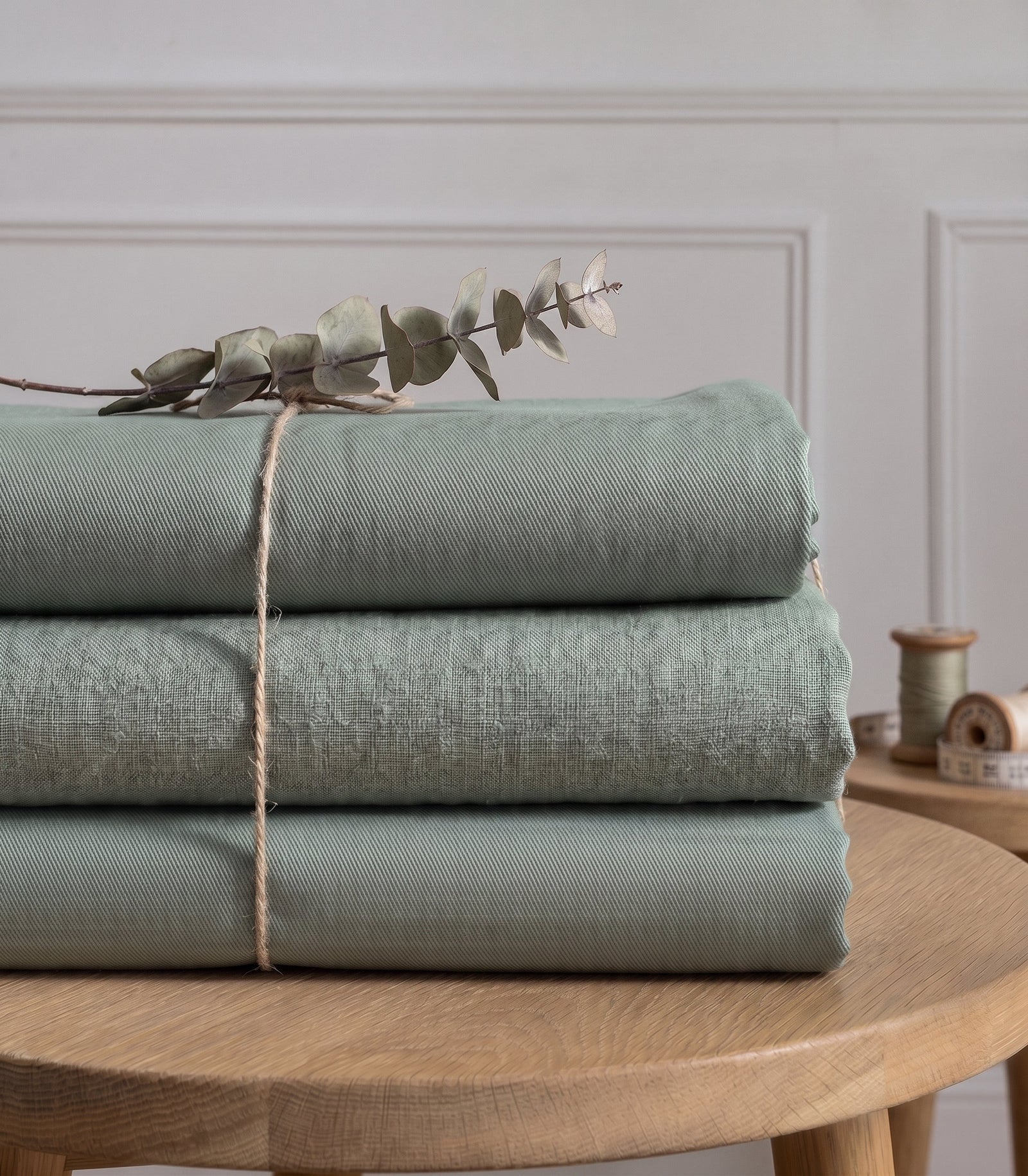
Linen has a look that is difficult to imitate. Its natural texture gives an apron character before it is even worn. It is absorbent, breathable, and dries relatively quickly, which can make it comfortable in warm environments.
It is also a strong fiber. Still, fiber strength does not guarantee that a linen apron will remain crisp or look new through commercial use.
Linen has low elasticity, so it creases easily. For some people, those wrinkles are part of its charm. For a business that wants every team member to begin each shift in a smooth, consistent uniform, they may mean more pressing and more labor.
This makes linen especially compelling when appearance, texture, and personal values lead the decision. A chef in an intimate open kitchen, a baker serving at a weekend market, or a home cook buying one special apron may happily accept the maintenance in exchange for linen’s distinctive feel.
In other words, linen does not fail because it wrinkles. It simply communicates a more relaxed visual language.

Why Polycotton Works So Well for Professional Aprons
Polycotton combines cotton with polyester, and the percentage of each fiber can vary. The goal is not to disguise polyester as cotton. It is to combine useful qualities from both.
Cotton contributes softness, absorbency, and a more natural feel. Polyester generally adds strength, resilience, wrinkle resistance, quicker drying, and better shape retention.
The University of Georgia’s textile guidance describes polyester fabrics as strong, resistant to abrasion, easy to care for, and wrinkle-resistant. It also points out an important limitation: oil and grease stains may require pretreatment before washing. You can read more in the University of Georgia Extension’s textile guide.
That combination is valuable in professional environments.
A restaurant may wash its aprons after every shift. A bartender repeatedly leans against wet counters. A barber loads pockets with tools. A potter works around clay, water, and abrasive surfaces.
In these situations, an apron has to do more than feel good during the first fitting.
It needs to return to work.
In our experience, a quality polycotton fabric generally holds its color and shape longer, wrinkles less, dries faster, and shows wear more slowly than many comparable 100% cotton or linen fabrics under repeated business use.
It can reduce the time spent ironing and help a team maintain a more consistent appearance from one shift to the next.
That does not make every polycotton fabric good. A thin, loosely woven blend can still fail quickly. A badly dyed fabric can still fade. A poorly chosen blend can feel stiff or trap too much heat.
Composition matters, but so do fabric weight, weave, finishing, and the demands of the job.
A Note About Stains: Polyester Is Not Magic
Polycotton is often marketed as “stain-resistant,” but that phrase needs context.
Polyester absorbs relatively little water, so many water-based spills are less likely to soak into the fiber itself. That can make a polycotton apron easier to keep looking clean.
Oil is different.
Polyester attracts and can retain body oils, cooking grease, and other oily substances. That is why greasy marks should be treated before the apron enters the dryer.
The fabric’s weave and finish also matter. A dense twill may offer better surface protection than a loose plain weave, regardless of the fiber percentages. Darker colors may disguise some marks, while very light fabrics reveal almost everything.
The honest claim is not that polycotton cannot stain. It is that a well-chosen polycotton fabric often provides easier overall care for busy businesses.
The Fiber Label Cannot Tell You How Long an Apron Will Last
Here is where most fabric comparisons stop too early.
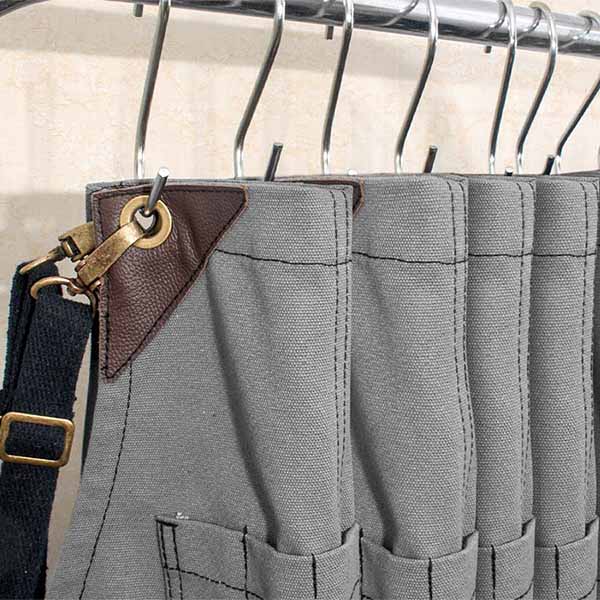
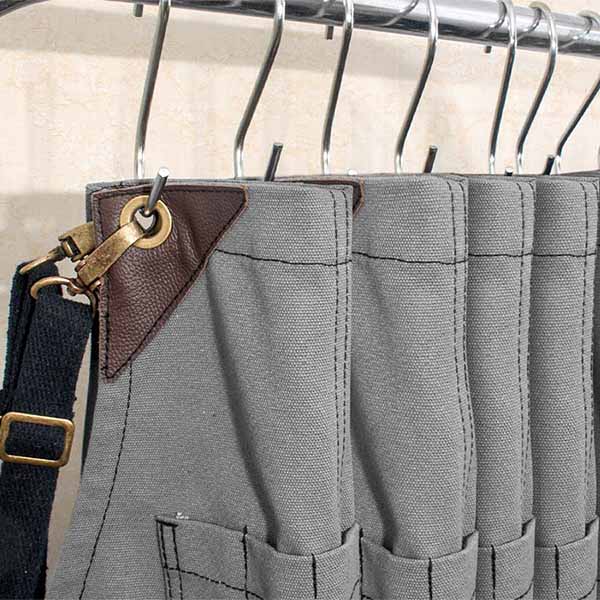
An apron can be made from excellent material and still come apart because the pocket was poorly attached. Straps can pull away. Seams can open. Hardware can fail. Thread can break at the exact points where the garment receives the most stress.
Durability is a system.
A well-made work apron should account for movement, loaded pockets, repeated pulling, and frequent laundering.
Important construction details include:
- Reinforcement at pocket corners and strap attachment points
- Strong, even seams with secure finishing
- Thread suited to the fabric weight and intended use
- Hardware that can withstand movement and washing
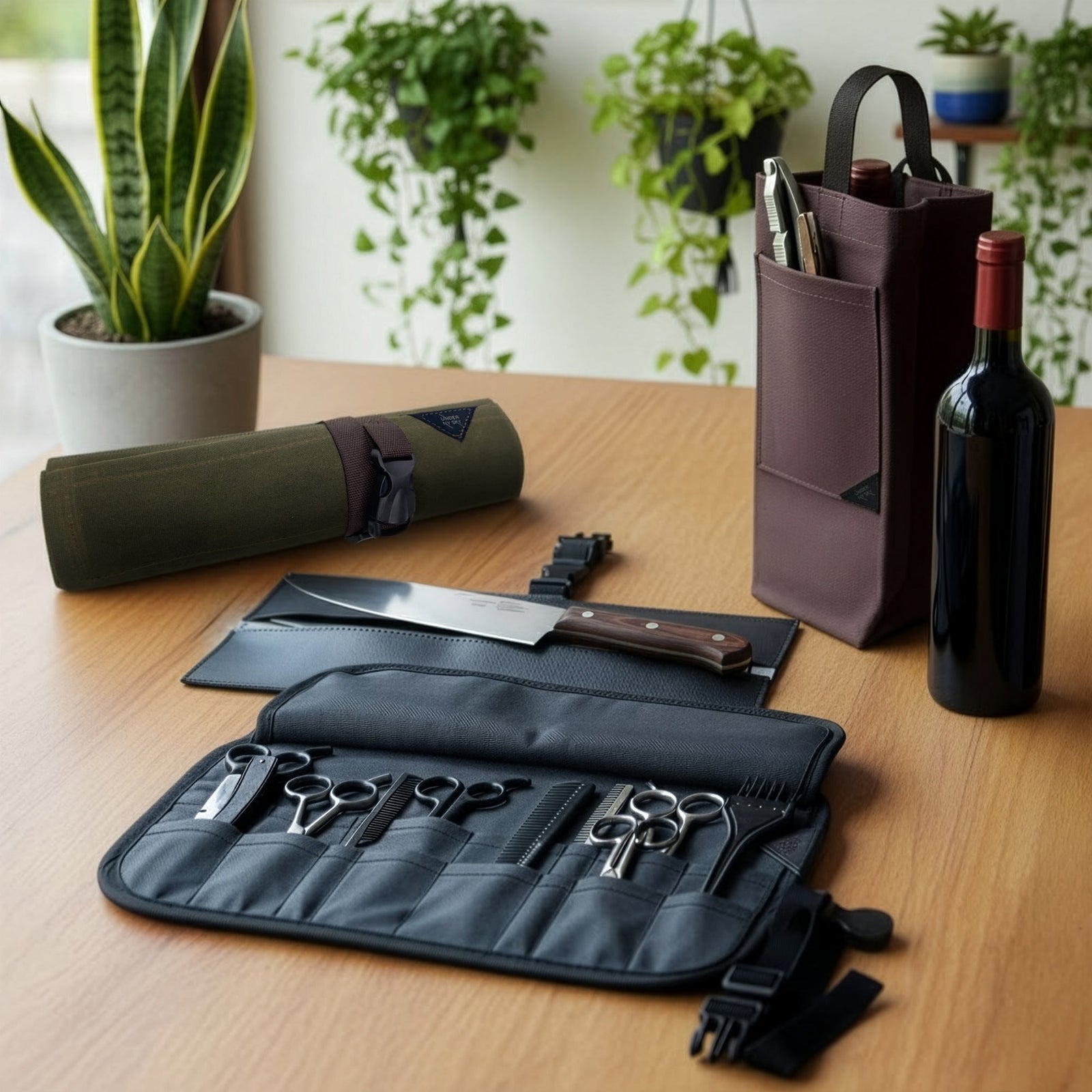
- Pockets constructed for the tools they are expected to carry
- A fit that allows movement without constantly straining the same seams
The Guardian’s guidance on identifying durable clothing also recommends checking seams, reinforcement, pockets, and hardware. These are often the first places where a garment reveals how carefully it was made. You can read the complete garment durability guide from The Guardian.
This is why a carefully constructed cotton apron may outlast a poorly made polycotton one.
Fiber content influences performance, but it cannot rescue bad construction.

The Cheapest Apron Can Become the Most Expensive One
For a business, replacement is not just a product expense.
There is the cost of placing another order, confirming sizes, waiting for delivery, replacing embroidery or branding, distributing new uniforms, and dealing with a team that may no longer look consistent.
If an apron costs less at checkout but needs to be replaced twice as often, the bargain disappears quickly.
A more useful question is:
What does this apron cost over its useful life?
That calculation should include the purchase price, customization, laundry and pressing requirements, administrative time, and replacement frequency.
WRAP’s work on clothing longevity connects longer product life with lower resource use and less waste. Its design guidance specifically points to durable fabrics, trims, and construction methods as ways to extend the life of clothing.
You can explore its research on extending clothing lifetimes and its design guidance for longer-lasting clothing.
For professional uniforms, longevity can create two benefits at once: less textile waste and a lower lifetime cost for the business.
Is Natural Fabric Always More Sustainable?
No. But synthetic fabric is not automatically the greener answer either.
Cotton and linen come from plants, but “plant-based” and “organic” are not synonyms. Organic refers to specific growing and certification standards.
Conventionally grown cotton may involve substantial land, water, pesticide, and fertilizer use. The effects vary considerably according to the region, farming method, and local water conditions.
Polyester brings a different set of concerns. It is made from fossil resources, and synthetic textiles can release microplastic fibers during manufacturing, use, washing, and disposal.
Blended fabrics can also be more difficult to recycle because separating their different fibers remains challenging.
The European Environment Agency explains the central issue clearly: different fibers create different environmental pressures, so there is no simple way to declare one fiber best in every category.
Cotton can carry higher land and water impacts, while synthetic fibers bring concerns related to fossil resources, climate emissions, and microplastic pollution. The agency discusses these issues in its report on plastic and synthetic textiles in a circular economy.
There is another important distinction to make.
Water pollution from textile dyes and finishing chemicals is primarily a manufacturing issue. It is not something caused only by cotton farming or by one particular country.
Dyeing and finishing can affect cotton, linen, polyester, and blended textiles. The fiber’s origin is only one part of the environmental story.
The final product’s useful life matters too.
The European Environment Agency prioritizes durability, repair, reuse, and longer product lifetimes as part of reducing the environmental effects of textiles. You can find those recommendations in its report on textiles and circular design.
A longer-lasting apron does not automatically have the smallest total environmental footprint. Still, an apron that remains useful and presentable longer may reduce the materials, energy, shipping, and waste associated with frequent replacement.
That is why sustainability cannot be read from the fiber label alone.

Five Questions to Ask Before Choosing an Apron Fabric
Instead of asking whether cotton, linen, or polycotton is universally best, ask these five questions.
1. How Often Will the Apron Be Worn and Washed?
Occasional home cooking places very different demands on a fabric than daily restaurant service and frequent commercial laundering.
2. What Kind of Mess Will It Face?
Water, flour, clay, hair, ink, grease, and chemicals interact differently with fabric. No single material protects equally well against all of them.
3. How Polished Must It Look?
Linen’s wrinkles can feel intentional and beautiful. In a highly standardized uniform program, wrinkle resistance and color consistency may matter more.
4. How Well Is the Apron Made?
Inspect the seams, stress points, pocket construction, straps, hardware, and finishing. Material quality and workmanship must support each other.
5. What Matters Most to You?
Comfort, maintenance, aesthetics, environmental priorities, price, and lifespan are all legitimate considerations. The right answer depends on how you rank them.
Our Verdict After More Than a Decade of Making Aprons
Cotton is a strong choice when softness, breathability, and a natural feel come first.
Linen is compelling when texture, airflow, and a relaxed premium look matter most.
Both can be excellent for home use, lighter professional use, and businesses that consciously accept more maintenance in exchange for a specific aesthetic or material preference.
For busy restaurants, cafés, bars, salons, and studios, polycotton is often the most balanced choice.
It generally offers the durability, wrinkle resistance, shape retention, and easier care that frequent professional use demands, while the cotton in the blend helps preserve comfort and a more natural feel.
But the best fabric is still not enough.
A professional apron should combine the right material with strong construction, thoughtful design, and a fit suited to the work. That is what allows it to remain useful, comfortable, and presentable through the real rhythm of a business.
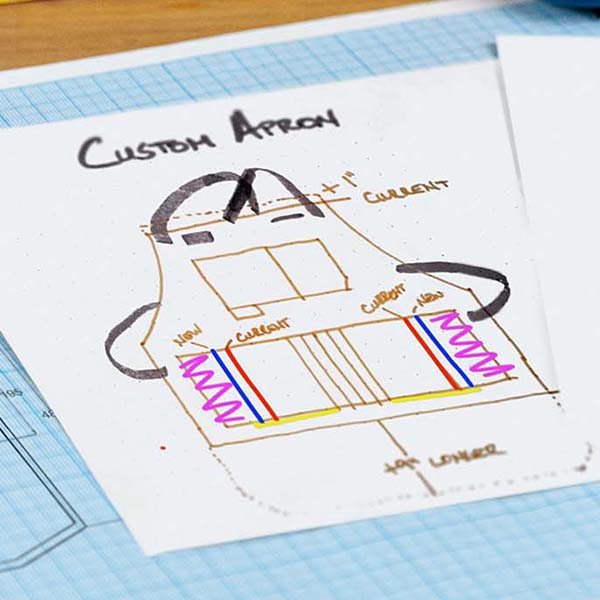
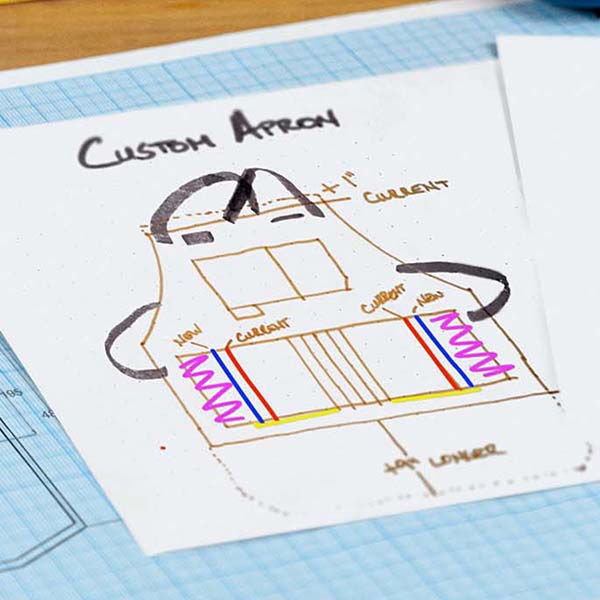
If you are selecting aprons for a team, our Custom and Bulk Orders service can help you adapt the design, branding, and practical details to your needs.
We also support custom-made uniforms in smaller quantities than many traditional uniform suppliers because small teams deserve gear built for the way they actually work.
The goal is not to choose a fiber because its label sounds better.
It is to choose an apron that makes sense for your work, your image, your values, and the number of times you expect to wear it.





Leave a comment (all fields required)